Russia's first printed laryngeal implant to accelerate rehabilitation of cancer patients
- Новости
- Science and technology
- Russia's first printed laryngeal implant to accelerate rehabilitation of cancer patients

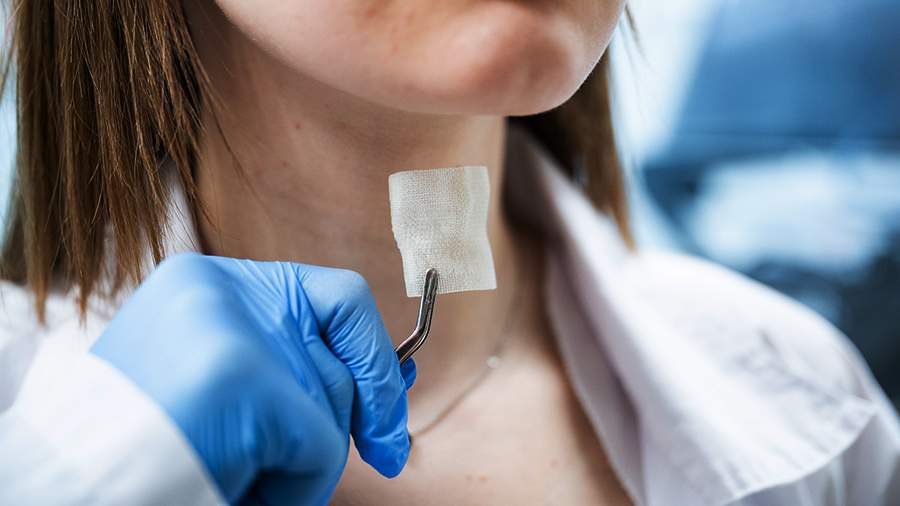
The staff of NUST MISIS has proposed an original technology for the production of individual thyroid cartilage implants of the larynx. They can be printed on a 3D bioprinter and made in accordance with the characteristics of a particular patient, so that later during surgery they can replenish the lost part of the throat. The developers have already received a prototype of the product. According to them, the method they created is economically beneficial and makes it possible to mass-produce a medical product.

Thyroid cartilage, which performs protective and supporting functions in the body for surrounding organs, prevents the collapse of the respiratory tract, and serves as a place of attachment of muscles and ligaments. However, if it is damaged, it is difficult to repair it, since there are no blood vessels in it, and the cells that provide renewal do not divide well. This problem most often occurs in cancer patients during cancer treatment in cases where the tumor grows into the larynx and the thyroid cartilage is removed. This type of tumor is one of the most common types of head and neck cancer.
Scientists have come up with the idea of printing a thermoplastic polyurethane mesh for a specific patient. So that his new cells could conveniently attach to this surface, they coated it with collagen or applied a biocompatible polyelectrolyte complex of chitosan and polyglutamic acid. These compounds have long proven their effectiveness in regenerative medicine.
"We have obtained customized polyurethane cartilage scaffolds using FDM printing and thermoforming based on CT data. Cytotoxicity tests have shown that the material is absolutely safe. We hope that with further implementation, the development will accelerate the rehabilitation of patients," says Elizaveta Peshkina, a graduate of the iPhD Biomaterial Science program at NUST MISIS.
The model assumes a promising industrial implementation within five to six years.
Read more about the technology in the exclusive Izvestia article:
Переведено сервисом «Яндекс Переводчик»
