Why Israel is attacking Syria because of the Druze. Analysis

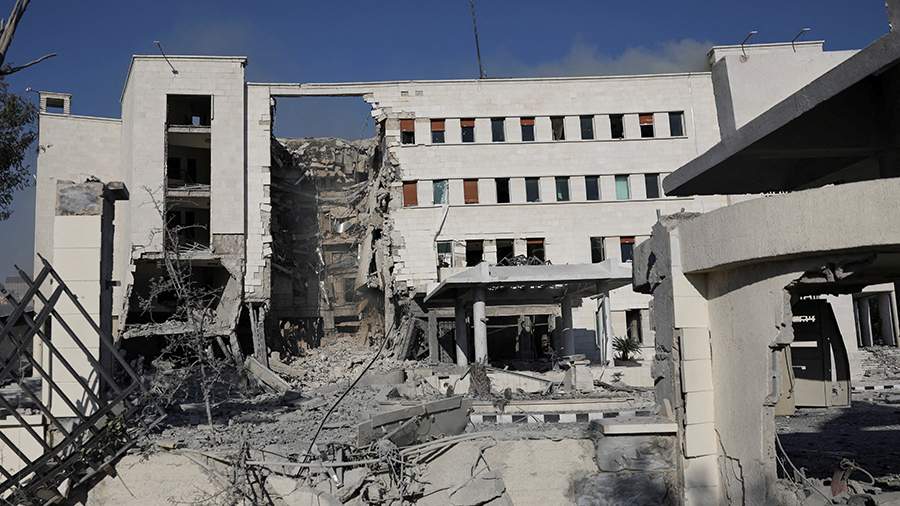
Israel has launched strikes in Syria to protect the Druze community. This is not the first time Tel Aviv has stood up for this ethnic group. At the same time, Israel's interest in resolving the internal Syrian conflicts has pragmatic reasons. What exactly is the reason for the aggravation of relations between Syria and Israel — in the Izvestia article.
Druze in Syria
The Druze are a unique ethno—religious group whose roots date back to the beginning of the 11th century. This religious trend arose as an offshoot of Ismailism, one of the Shiite schools of Islam. The Druze religion is closed, that is, conversion to it is impossible, it is transmitted exclusively by inheritance.
• The number of Druze is small, about 1 million people worldwide, and a significant part live in Syria (more than 800 thousand), Lebanon (almost 300 thousand) and Israel (over 100 thousand). In Syria, the Druze are concentrated mainly in the south of the country in a mountainous area.
• Relations between the Druze and the rest of the Syrian population are quite complicated, and conflicts and clashes periodically arise. The last major confrontation took place in April, and then Israel also intervened (we wrote more about that conflict here).
• The increased military clashes inside Syria are primarily related to the resignation of former President Bashar al-Assad in December 2024. The situation in the state as a whole remains quite tense. Clashes between those loyal to the transitional government led by Ahmed al-Sharaa (Julani), the leader of Hayat Tahrir al-Sham (a terrorist organization banned in Russia), and other ethnic groups, including Alawites and Kurds, are not uncommon.
• Conflicts often arise due to economic difficulties, including food shortages. There are also skirmishes between local Druze self-organized structures and government troops or militia. These clashes often take the form of local armed incidents. At the same time, the Druze do not seek separation from Syria or the formation of their own state, their goal is to preserve their cultural identity within the framework of the Syrian state.
• A new round of tension began quite recently. A Druze vegetable vendor was abducted and robbed on July 11 in a suburb of Suwayda. Presumably, the crime was committed by Bedouins. As a result, a conflict broke out between the Druze and the Bedouins, as a result of which dozens of people died.
Why did Israel intervene
• On July 16, Israel launched airstrikes against Syrian military installations due to the conflict between Bedouin groups and Druze. Both the areas south of Damascus and the areas adjacent to the presidential residence and the Ministry of Defense building were under attack. The Israeli military is also planning to deploy additional units to the Syrian border.

• The Israeli Defense Ministry warned that continued aggression against the Druze would have serious consequences. In Tel Aviv, they emphasize that the Syrian leadership must prevent and suppress any attacks on Druze communities. In response, the Syrian leadership said that Tel Aviv's attempts to destabilize the country and cause internal division were doomed to failure. In Damascus, it was reported that they are ready to resist Israeli aggression and are not afraid of a possible military clash.
• Israel's interest in protecting the Druze in Syria may look like a show of solidarity with the religious minority. However, the real reasons are much more complicated. There are over 100,000 Druze living in Israel, they are full-fledged citizens of the country: they serve in the army and participate in politics. This is the only Arabic-speaking group in Israel that is required to serve in the army. As a result, it has formed a unique relationship between the Druze community and the Jewish State. For decades, Druze in Israel have been perceived as loyal citizens. At the same time, such commitment is often projected beyond national borders.
• At the same time, there are more pragmatic motives in Israeli support for the Druze. One of the Syrian Druze communities is concentrated in the Golan Heights, part of which is de facto under Israeli control. Given the internal instability in Syria, Israel is closely monitoring the situation in these territories in order to strengthen its influence there, if possible.
• In addition, Israel has a strategic interest in maintaining stability in its border areas. The support of the Druze in southern Syria is seen as one of the ways to form a buffer zone loyal to Tel Aviv. With pro-Iranian forces operating in Syria, including Hezbollah and the Islamic Revolutionary Guard Corps (IRGC), Israel is seeking to minimize their influence near its border.

International reaction
• The Russian Foreign Ministry expressed serious concern over the new surge in violence in Syria. At the same time, Moscow has also repeatedly spoken out about the military operations conducted by Israel in Syria, pointing out their illegal nature.
• In turn, Washington announced that it had reached agreements on steps that should lead to the end of the "terrifying and disturbing confrontation" between Syria and Israel.
• The situation in Syria has also alarmed Turkey. Ankara expressed its readiness to support the Syrian authorities on defense issues if the new leadership receives a corresponding request. Such assistance may include measures to strengthen the Syrian military infrastructure and assistance in combating terrorist threats.
• The July escalation of the situation around the Druze and Israel's actions pose a potential threat of a local conflict escalating into a broader regional confrontation. At the same time, it still has unpredictable consequences for regional security. It is likely that the United States may support Israel, as happened during the confrontation between Tel Aviv and Tehran. European countries are unlikely to interfere in the region, because the conflict in Ukraine is their priority.
When writing the material, Izvestia talked and took into account the opinions of:
- Orientalist, Program Manager of the Russian Council on International Affairs (RIAC) Ivan Bocharov;
- Stanislav Tarasov, an expert on the problems of the Middle East and the Caucasus;
- Sergey Balmasov, an expert at the Institute of the Middle East and the Russian Council on International Affairs;
- Mais Kurbanov, a political scientist and specialist in the Middle East.
Переведено сервисом «Яндекс Переводчик»
