July 21 is the Feast of the Appearance of the Icon of the Mother of God in Kazan: the story of the miraculous image
- Новости
- Local news
- July 21 is the Feast of the Appearance of the Icon of the Mother of God in Kazan: the story of the miraculous image

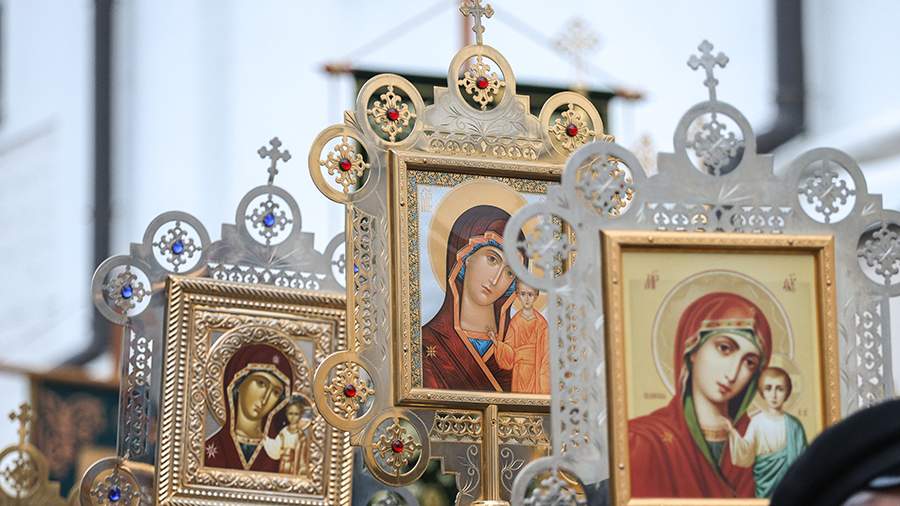
Every year on July 21, the Russian Orthodox Church celebrates one of the most significant events in its history — the appearance of the icon of the Mother of God in the city of Kazan. In 2025, the celebration falls on a Monday. Izvestia tells us how the shrine was found and how it helps believers.
The Day of the appearance of the icon of the Kazan Mother of God — history
In 1552, Tsar Ivan the Terrible organized a campaign against the Kazan Khanate to strengthen the country's eastern borders. The military campaign ended with an unconditional victory for the Russian army: the Khan's troops were defeated, and Kazan— the center of the khanate, became part of Russia. Soon after, the Kazan Archdiocese was established, and Orthodox churches and monasteries began to be built in the city.
However, the spread of the Christian faith in the new territory was complicated by fierce resistance from the Muslim and pagan populations. In June 1579, Kazan suffered from a severe fire — many residential buildings burned down, and half of the Kazan Kremlin was destroyed. Since the fire broke out near the church of St. Nicholas of Tula, the Muslims decided that God was angry with the Gentiles. Therefore, according to the chroniclers, "the faith of Christ has become a parable and a reproach."
Over time, the city began to recover. Among those who had to rebuild their house was Daniel Onuchin, a Sagittarius. One day, his nine-year-old daughter Matrona saw the Mother of God in a dream, telling her to dig up her icon, hidden by secret Christians back in the days of Muslim rule. The girl told her parents about everything, but the adults just waved her off. However, the apparitions did not stop — three times the Mother of God appeared to Matrona, demanding to find an image, and the last time her face was menacing and her voice was stern.

The frightened girl convinced her mother to go with her in search of the icon. Enlisting the support of the Kazan clergy, they began to dig in the indicated place and soon found the icon of the Mother of God. According to legend, it shone with beauty and looked as if it had been painted very recently.
Archbishop Jeremiah of Kazan arrived at the place of the miraculous finding. He transferred the shrine to the church of St. Nicholas, and from there it was sent with a procession to the Annunciation Cathedral, the first Orthodox church in Kazan. According to legend, many miraculous healings took place during the procession.
A list of the icon with descriptions of all the miracles was sent to Moscow. After reviewing them, Ivan the Terrible ordered the construction of a temple in honor of the Kazan Icon of the Mother of God on the site of the image and the establishment of a convent there. Matrona and her mother were among the first to take vows there.
Subsequently, the Kazan icon of the Virgin Mary became one of the most revered in Russia. The shrine has repeatedly helped Russian soldiers to win. In particular, the list of this icon gave strength to the militia led by Kuzma Minin and Dmitry Pozharsky, who liberated Moscow from the Polish invaders in 1612.
Kazan Icon of the Mother of God — iconography, which helps
The Kazan Icon of the Mother of God belongs to the iconographic type of Hodegetria, which translates from Greek as "Guide Book". As a rule, on such icons the Virgin Mary is depicted waist-deep with the Christ child in her arms. With one hand, she points to her son as the source of humanity's salvation. Jesus himself raises one palm in a blessing gesture, and in the other hand holds a scroll with the Gospel.
However, the Kazan icon stands out from other similar images. The Virgin Mary is painted shoulder-length on it, which is why the hand pointing to the Savior is not visible. The baby Jesus still blesses the worshippers, but his other hand is hidden by a robe. In addition, the head of the Virgin Mary bends slightly towards her son, which is more typical for icons such as Eleus, "Tenderness".

The Kazan Icon of the Mother of God, like any other image of the Virgin, has no "specialization". The Virgin Mary is considered the main intercessor of mankind before God, so believers can turn to her with any trouble.
In front of the Kazan Icon, they pray for healing from diseases, a happy marriage, the establishment of peace in the family and the birth of healthy children. People who are at a crossroads and want to make the right choice also come to this image. In addition, people often pray in front of the shrine for the well-being of the soldiers-defenders of Russia, since over the centuries she has saved the country from enemies more than once.
Where is the original Kazan Icon of the Mother of God?
Until the beginning of the 20th century, the Kazan Icon was kept in the cathedral of the Kazan Maiden Monastery. But in 1904, she was stolen by a criminal group led by a certain Bartholomew Chaikin, nicknamed Stoyan. The criminals were caught, but the fate of the image remained unknown. Investigators have suggested that the icon was burned, but testimony on this issue differs. Anyway, the original shrine was lost.
Lists of the Kazan Icon can be found in churches all over Russia. The list closest to the original image is kept in the Epiphany Cathedral in Yelokhovo. Another famous list is in the iconostasis of the Kazan Cathedral of St. Petersburg. It belonged to the wife of John V, Tsarina Praskovia. In the early 18th century, Peter the Great moved it to the young Northern capital. The tsar treated the icon with reverence, considering it the patroness of the city on the Neva.

The Vatican list of the Kazan Icon got its name due to the fact that it was kept for a long time in the chambers of Pope John Paul II in the Vatican. It was sold abroad by the Bolsheviks in 1917, along with other church valuables. The image came a long way before ending up in the heart of the Catholic Church: he visited California, exhibited at the World's Fair in New York, and visited Lisbon. It was only in 2004 that the icon was returned to the bosom of the Russian Orthodox Church. Now it is kept in the Holy Cross Church of the Kazan Bogoroditsky monastery.
There are other venerated lists of the Kazan Icon of the Mother of God. They are stored in Yaroslavl, Vitebsk, Tobolsk, Tambov and other cities.
Earlier, Izvestia reported on the history and significance of the Akhtyr Icon of the Mother of God.
Переведено сервисом «Яндекс Переводчик»
