Experts explained the possible penalties for transferring a subscriber number.

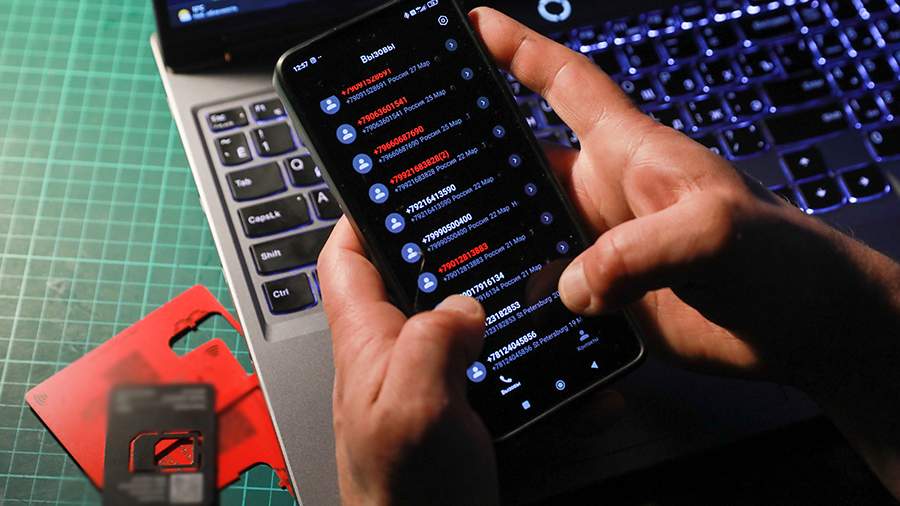
The State Duma Committee on State Construction and Legislation has approved amendments introducing fines for the illegal transfer of a subscriber number. As experts in the field of law and communications told Izvestia on July 16, the initiative threatens Russians with heavy fines and increased control over the use of mobile numbers.
"The State Duma Committee has indeed approved amendments introducing fines for transferring a subscriber number without permission, but so far the bill has not been finalized. <...> The essence of the proposed amendments is to introduce administrative responsibility for transferring a SIM card or providing communication services to others, bypassing the rules for subscriber identification. For individuals, the fine will range from 30 to 50 thousand rubles, for sole proprietors — from 50 to 100 thousand rubles, for legal entities — from 100 to 200 thousand rubles," explained Stepan Uglov, a lawyer at PRAVO—CITY law firm.
Albert Khaleyan, a criminal lawyer, partner of the Moscow Bar Association Vector Prime, and mediator at the Moscow Chamber of Commerce and Industry, called the initiative "heavy-handed" in a comment to Izvestia. According to him, the main problem is the ambiguity between the violation and personal use, as well as the lack of a clear mechanism of proof.
At the same time, as Haleyan noted, an exception is provided: short-term transfer of a SIM card for personal purposes, for example, to give a call to a child or a friend, will not be considered a violation. The key criterion in this case is the lack of regularity and commercial use.
"The purpose of the amendments is crystal clear: total control over who gets in touch and under which number. The fight against anonymity, "gray" schemes and, of course, against crime is a good intention. However, huge question marks are hanging over the implementation," he said.

According to Khaleyan, in the current version, the bill may cause difficulties in law enforcement. He stressed that there is a lack of clarity.: how to separate a domestic situation (for example, a call from someone else's phone) from a violation, and in what ways it will be recorded.
According to the lawyer, it is expected that Roskomnadzor will be the main controlling body (authorized to consider cases under Articles 13.291 - paragraph 1 of Part 2 of Article 23.1, paragraph 1 of Part 2 of Article 28.3 of the Administrative Code of the Russian Federation in a new version). The Agency will be able to conduct both scheduled and unscheduled inspections of legal entities and entrepreneurs, as well as consider complaints from citizens and organizations.
Mirza Chiragov, head of digital Law, explained that the purpose of the innovation is to eliminate the turnover of so—called "gray numbers" that are used anonymously or through rental schemes for fraud, spam mailings or circumvention of locks.
In addition, the expert noted that the control mechanisms have not yet been fully formed. However, telecom operators can use technical means to detect violations, in particular, the analysis of IMEI numbers, geolocation, and network activity. Additionally, complaints from citizens, requests from law enforcement agencies, and discrepancies between the registered and actual user are taken into account.
"At the same time, it is important to understand that transferring a phone to another person is not prohibited by itself. It is the deliberate and regular transfer of a SIM card that is considered a violation, when one person uses a number issued to another, outside the framework of the law and the contract," concluded Chiragov.
On the same day, the State Duma Committee on State Construction and Legislation announced that it was considering the possibility of imposing a fine of up to 50,000 rubles for transferring a dedicated subscriber number to an outside party. These amendments may be supplemented by Article 13.29.1 of the Administrative Code of the Russian Federation ("Conclusion by a telecom operator or a person acting on behalf of a telecom operator of a contract for the provision of communication services via the Internet information and telecommunications network in a manner not provided for by the legislation of the Russian Federation in the field of communications").
Переведено сервисом «Яндекс Переводчик»
