A special Russian holiday on July 17 — Andrey Naliva: history, traditions, omens

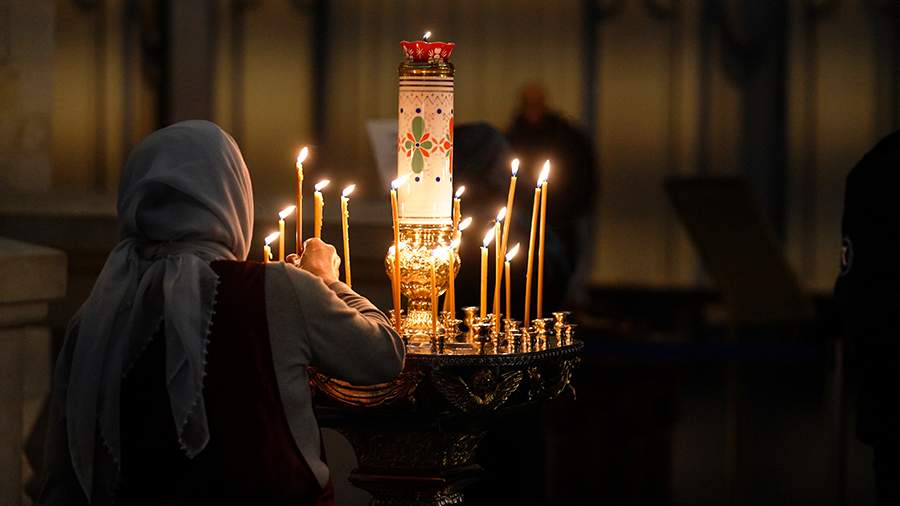
Every year on July 17, the Orthodox Church honors the memory of three saints: St. Andrew, Archbishop of Crete, the Venerable Prince Andrew Bogolyubsky and St. Andrew Rublev. In 2025, the celebration falls on Thursday. In the national calendar, this day is called Andrei Naliva. Read about the history, traditions and signs of the holiday in the Izvestia article.
What is the church holiday on July 17th?
On July 17, Orthodox believers remember three saints named Andrew. Each of them has left a vivid mark in the history of the Church.
St. Andrew was born in Damascus in the second half of the seventh century. He came from a family of devout Christians and had attended church with his parents since childhood. According to legend, the boy did not speak until he was seven years old, but after the first communion of the Holy Mysteries of Christ, he miraculously found the power of speech. After that, the future saint began to actively study the Holy Scriptures and become interested in the theological sciences.
At the age of 14, Andrew retired to the Jerusalem monastery of St. Sava the Consecrated in order to devote himself entirely to the service of God. There he took monastic vows and soon won the respect of the brethren due to his meekness, outstanding mind and strict life. In 679, he took part in the Sixth Ecumenical Council. Later, during the reign of Emperor Justinian II, he became Archbishop of Crete.
St. Andrew is one of the most famous church poets of his time. It was thanks to him that such a liturgical form as the canon appeared. In particular, from the pen of Andrew of Crete came the Great Canon of Penance, which is read during Great Lent, it is also called "St. Andrew's Standing". Other famous works of the saint include the canon for the Nativity of Christ, the triplets for Compline on Palm Sunday, and many others.

The Holy Prince Andrew Bogolyubsky lived in 1110-1174. He was the grandson of Vladimir Monomakh and the son of Yuri Dolgoruky. Since childhood, the future Grand Duke of Vladimir was distinguished by piety, attended church services and generously distributed alms to those in need. He was also a skilled warrior and more than once defended the interests of the state with a sword in his hands.
In 1155, Andrei Bogolyubsky transferred the miraculous icon of the Virgin, presented to his father by the Patriarch of Constantinople, from Vyshgorod to the Vladimir-Suzdal lands. Initially, the prince wanted to take the shrine to Rostov, but the horses suddenly stood next to Vladimir, refusing to go any further. Deciding that this was a sign from above, the prince stayed there for the night. That same night, he saw the Mother of God in a dream, who ordered her image to be taken to Vladimir, and a church of the Nativity of the Virgin Mary to be built on the site of the miraculous apparition. Andrei Bogolyubsky did exactly as he was told, and the icon he brought became known as the Vladimir Icon.
Reverend Andrei Rublev, the great icon painter and creator of the famous image of the Holy Trinity, also left a vivid mark in the history of the Russian Orthodox Church. Almost nothing is known about his life. It is believed that he was born around 1360. The presence of a surname suggests that he came from a noble family, since at that time only representatives of the upper strata of society had surnames. Researchers believe that Andrei studied icon painting in Byzantium and Bulgaria. He took monastic vows at the Spaso-Andronikov Monastery in Moscow.
In addition to the miraculous image of the Holy Trinity, Andrei Rublev created a list of the Vladimir Icon of the Mother of God for the Assumption Cathedral in Vladimir, painted the walls of the cathedral and made an iconostasis for it. He also worked on the iconostasis and wall paintings of the Trinity Cathedral of the Trinity-Sergius Lavra, the painting of the Annunciation Cathedral of the Moscow Kremlin and many others.
Traditions of the national holiday Andrey Naliva on July 17th
In Russia, July 17 was called St. Andrew's Day or St. Andrew's Day. The unusual name of the holiday is due to the fact that in the middle of July, the ears of winter crops were being filled, and oats were also beginning to ripen.
Our ancestors considered oats to be one of the most important agricultural crops, so there was a special attitude towards it on the holiday. In the morning, the women cooked oatmeal porridge, boiled oatmeal soup, and baked oatmeal. The unmarried girls cooked oatmeal jelly, and then ate it and licked the bowls. It was believed that this simple ritual would help to get married faster.

Before the whole family sat down to the table, the peasants fed the horses to their hearts' content, as the success of the summer harvest largely depended on them. To prevent the animals from getting sick, they were allowed to breathe steam from boiled oat husks.
It was customary to spend St. Andrew's day at work. The villagers cleared the fields and harvested hay. At the same time, many hoped for rain in the evening. It was believed that precipitation on the holiday was especially beneficial for crops.
What can and cannot be done on Andrei Naliva on July 17th
The Orthodox Church does not set any special prohibitions on July 17, there is no fast on this day. Believers can visit the temple, light a candle or pray at home. It will be useful to recall the lives of the saints whose memory is revered on this day.
In Russia, various prohibitions and superstitions were associated with the feast of Andrei Naliva. The ancestors did not plan any important tasks for the first half of the day, as they believed that they would not end in success. It was believed that on July 17, one should not rush and fuss, otherwise one can attract various troubles into one's life.
They did not borrow money from Andrey and did not lend it to anyone. According to beliefs, it will be difficult to return the money to both the borrower and his "lender". They did not engage in trade until noon and did not conclude any financial transactions in order not to run out of funds.
Some of the prohibitions were related to family life. The couple should not have succumbed to jealousy, so as not to disturb the peace in the house. Parents tried not to leave young children unattended. It was believed that alone a baby could get scared and grow moody.
Folk signs on July 17th
On St. Andrew's Day, our ancestors carefully monitored the weather. High clouds promised warmth in the coming days, and thunder promised a hail storm. If by July 17 the leaves on the trees were already beginning to turn yellow, they understood that autumn would be early. A good harvest of wild berries was considered a harbinger of a harsh winter. If the chickens hid in the coop with the first drops of rain, they were preparing for a prolonged downpour.
Earlier, Izvestia told about the history, traditions and signs of the national holiday of Mokiy and Mark, Stozhary.
Переведено сервисом «Яндекс Переводчик»
