
"Islands are a real survival school"
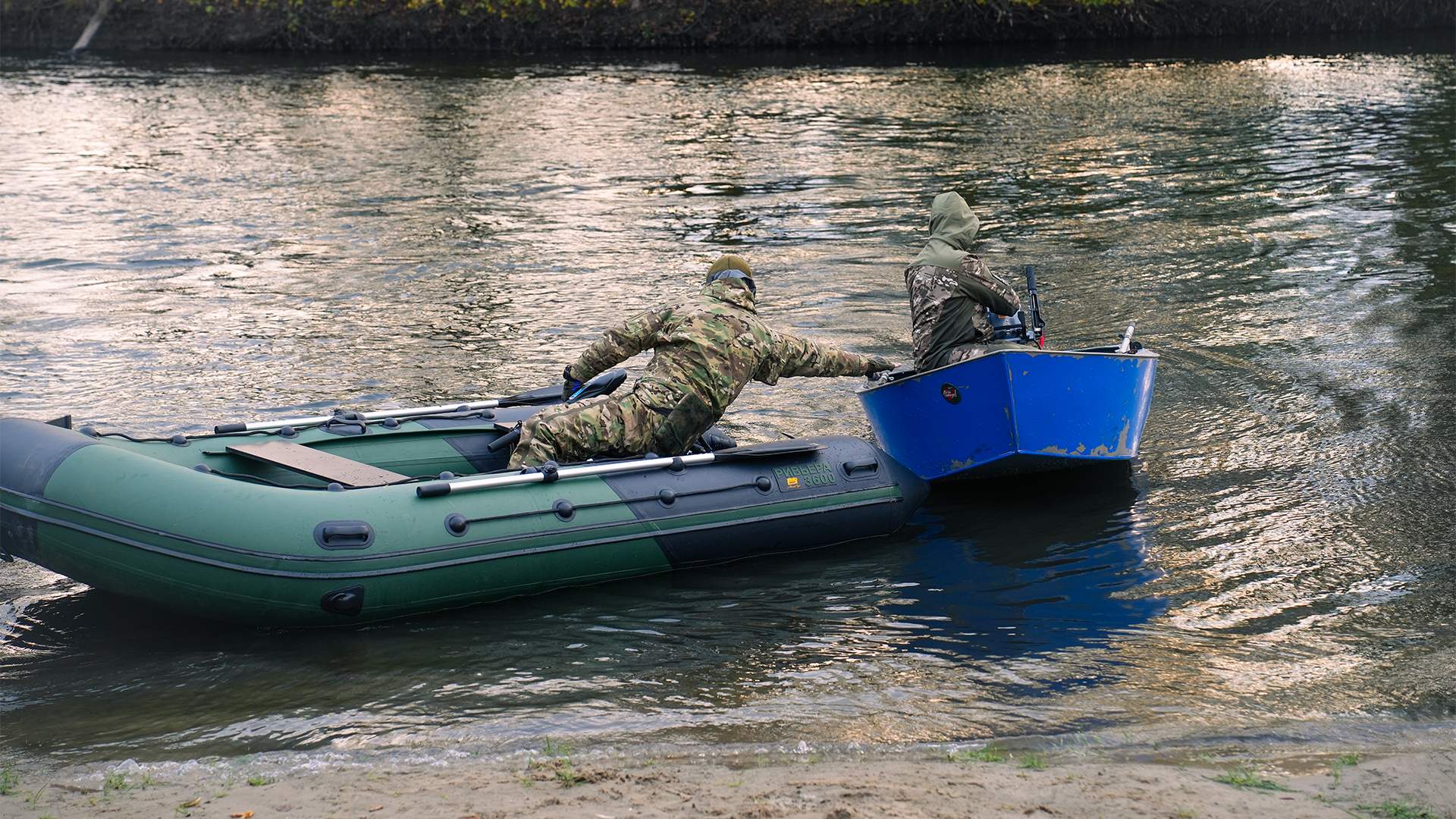
Crossing the "gray river", abandoning for a month and a half, ambushes, the incessant threat from the sky, the lack of any opportunity to hide — operations in the Dnieper delta are considered the most risky and difficult. The struggle for the islands in the Kherson region has been going on for the third year, most of them belong to us, but the enemy is constantly trying to seize these pieces of land. A special correspondent of Izvestia met with participants in the confrontation on the Dnieper front and learned how one has to live and fight in conditions of isolation from the mainland, what saving a person on the water is and why the most difficult thing in island operations is abandonment and exit.
Mikhail, call sign Filak, UAV operator:
— The confrontation on the islands is intense, it does not subside for a day or an hour. Whoever owns them has a strategic advantage, namely, it controls a springboard for a future offensive on the opposite shore. The specifics of the islands are large open spaces, thickets of reeds and shrubs, the territory is unsuitable for direct clashes, hence the fighting is guerrilla in nature — raids, ambushes, hidden infiltrations. There are separate points on the islands themselves, which are being fought for: whoever takes such a point controls the entire island.

The riverbed is heavily mined, both by us and by the Ukrainian Armed Forces. Any approach, ammunition drop, or evacuation is very dangerous — as soon as the enemy detects movement, the hunt begins for the target. He fires mortars, AGS, artillery, tanks, and attacks with drones. Electronic warfare is actively working, and over the past year this area has increased many times, including from the Ukrainian side. If earlier we could hit targets on the right bank without hindrance, now it is more difficult to do so. Nevertheless, we carry out the tasks.
Tungus, a military medic:
— I got to the Kherson area almost immediately after transferring to the Northern Fleet, to the Marines. He did not want to sit in the unit, he asked to return to his military area (before that, Tungus fought near Avdiivka and Ugledar. — Izvestia). My main profile is a paramedic, plus I was appointed senior evacuation group officer. I went out on the most difficult tasks as a reinforcement, in order to help the injured in case of injuries.

Tungus, rescued the wounded on the water after the shelling
I volunteered for the first exit, I wanted to understand — what does it feel like? After all, he participated in battles in landings, in the residential sector too, he had to ride on armor, even to land from a helicopter, but never on water. Access to the island always takes place on a "gray" basis — either early in the morning or after sunset. When I saw the scale of the Dnieper, I was stunned, of course, and remembered the words of my teacher in Russian language and literature, Olga Alekseevna Enushkevich, by the way, a native of Ukraine, who quoted Gogol: "A rare bird will fly to the middle..." And just halfway along the way, I realized how dangerous it is, how vulnerable and helpless you are. in the middle of the water, with no way to hide, crawl, or hide.

If injured, the chances of survival are almost zero. And in this sense, water does not tolerate mistakes. I would also like to note this observation — everyone who took part in the battles on the Dnieper, at the words "islands" or "boat" shudders and changes their face.
The most significant departure for me was when we went on a mission in several boats — we had to land at the right point, destroy the enemy and return as quickly as possible. We completed the task, but on the way back, already in the dark, we were attacked by enemy UAVs. The boat ahead was blown up by a kamikaze. The motorist did a great job — he managed to drive her away behind the reeds, hide her. After he reported on the radio that everyone was "three hundred" (wounded), he was already losing consciousness. The instructions instruct the rest of the calculations not to stop in this case, but to move on. But the guys and I unanimously decided to save, even against the prescription.
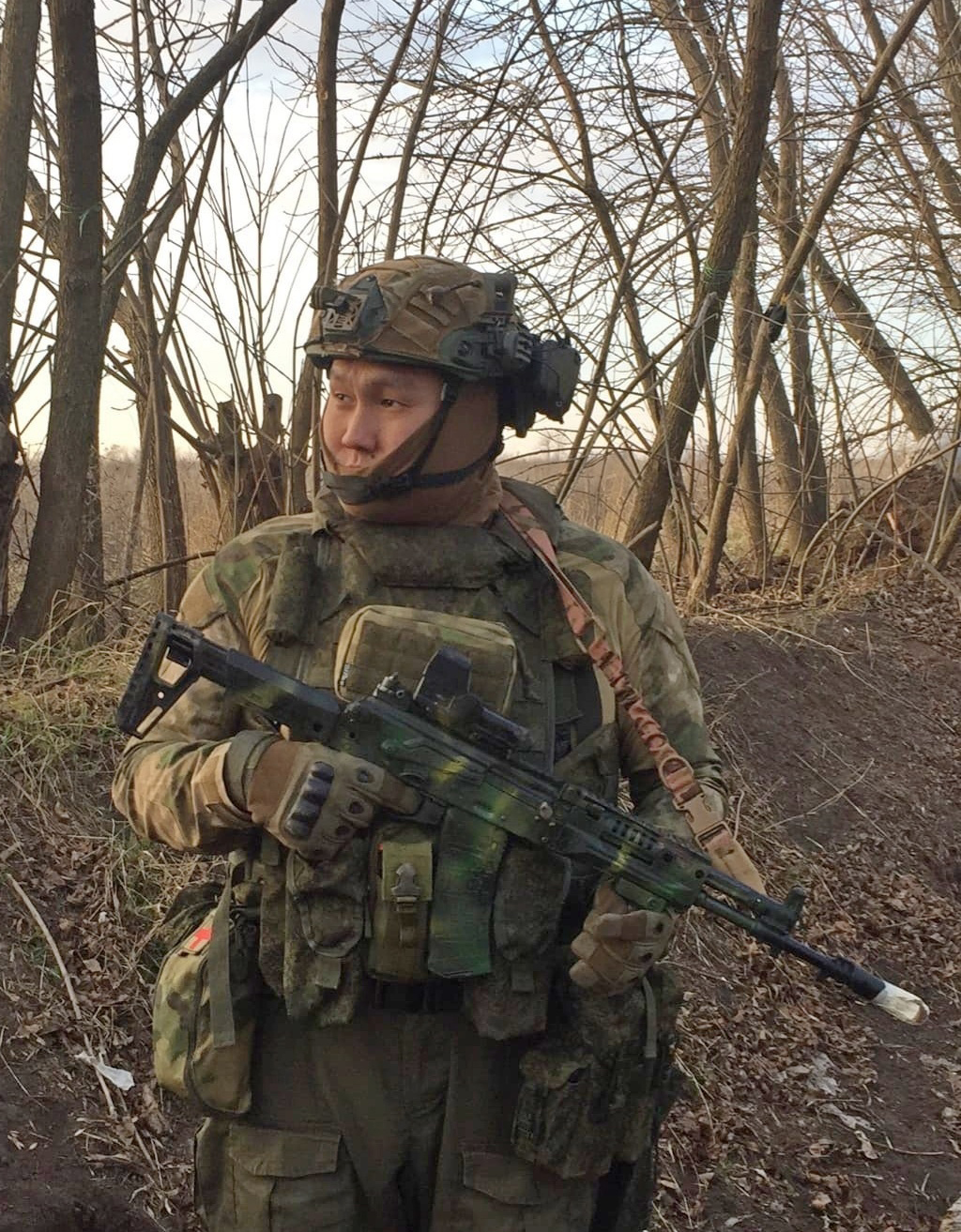
I moved into the wrecked boat, began to provide first aid to the "three hundred", my guys sailed on. I burned everyone out, the guys were conscious. At this time, the targeted shelling began. And then it became clear — the story was very bad, a critical moment. It helped that our people sent a distress signal, and at that time a group of allied soldiers was returning from a combat mission on a large boat. They weren't afraid to come over and took us all away. The wounded were evacuated and survived. I was awarded the most important award for a medic — "For saving the dead."
Yevpat, commander of the BARS-33 group named after V. Margelov, author of the songs "Ostrovnaya" and "Dneprovsky Frontier":
— We were assigned the task of landing on one of the islands and defending ourselves there. We spent 48 days on the island. To get to the point, it was necessary to walk 18 km in the layout: 30 kg of equipment, 20 kg of food, BC, water purification products, a rubber boat for crossing the channels, which we carry in turn. There were five water obstacles to overcome along the way. Most often, a volunteer swims across to the other shore, pulls on a rope, and the others, holding on to it, cross the boat, it is impossible to row because of the current. The whole trip there took about a day and a half.
We were on the defensive on the island in case of an enemy air force landing. They were on duty in shallow beds — 50-60 cm, you can't dig any more — water. You line the bottom with cellophane, mats, branches, if possible, a roll of logs. At night and in the rain, you cover yourself with an anti-drone blanket, but in order not to create a heat point visible from the air from thermal imagers, you open the canopy and leave an air cushion.

Yevpat, together with the group, spent more than 1.5 months on the island.
We used only the products that we took with us — it is extremely difficult to establish an air bridge. We fished somewhere and ate tree mushrooms. In general, islands are a real survival school. One day, the enemy fired incendiary shells at our territory — the grass caught fire, the trees behind it, our observation post burned down, including some of the food. And if earlier we had a calculation — one can of stew per day per person, then after that we had to divide the jar into four.

The tactics of the Armed Forces of Ukraine are different. One example is small mobile groups of four to eight people. They come in light, provoke a fight, thereby detecting us, and then turn on unmanned aircraft. About the actions of our troops, I will say that the artillery irons the right bank very carefully, there is a result, if earlier they reached us from AGS or 82-mm mortars, now there is practically none.
Roman Sly, volunteer, member of the Evpata group:
— The most dangerous thing on the islands is the entrance and exit. UAVs are constantly tracking you from above. There is no guarantee that the boat will not stall: we had a case when the guys' engine stalled, they were found out and started hammering — one was injured. The boat itself is slow because it is overloaded every time. During the crossing, I personally always undo the straps on my armor and helmet, so that, if anything, I can drop everything and try to get out. There are few chances, especially if there are "three hundred", but there have been cases when wounded guys swam to shore.

The call sign is Sly. On the islands
Once on the island, a friend and I were saved from death by chance. We were walking along the trail, turned off when we saw sorrel. And after one or two seconds, a mine flew onto the path, and a friend was injured. Another time it got me hooked. I felt a stab, we lay down, pulled up my trousers — it was bleeding, my partner helped me to make a bandage. I thought it was a section of soft tissue, but after evacuation and going to the doctors, it turned out that there was a fragment inside. Timely treatment saved it from rotting.
After our NP (observation post) burned down. — Ed.) and we had to build a new one. While exploring the island, we found the necessary materials left over from both our predecessors and the Armed Forces of Ukraine: abandoned film, mats, gas cylinders, chlorine tablets for disinfection of Irish-made water, anti-drone capes, and we managed to resolve the issue. I lost 12 kg in 48 days, but I don't regret it, we followed the order. I plan to stay at the front until the end, until victory.
Переведено сервисом «Яндекс Переводчик»
