
Goodbye, weapons: Kurds have abandoned the military struggle with Ankara
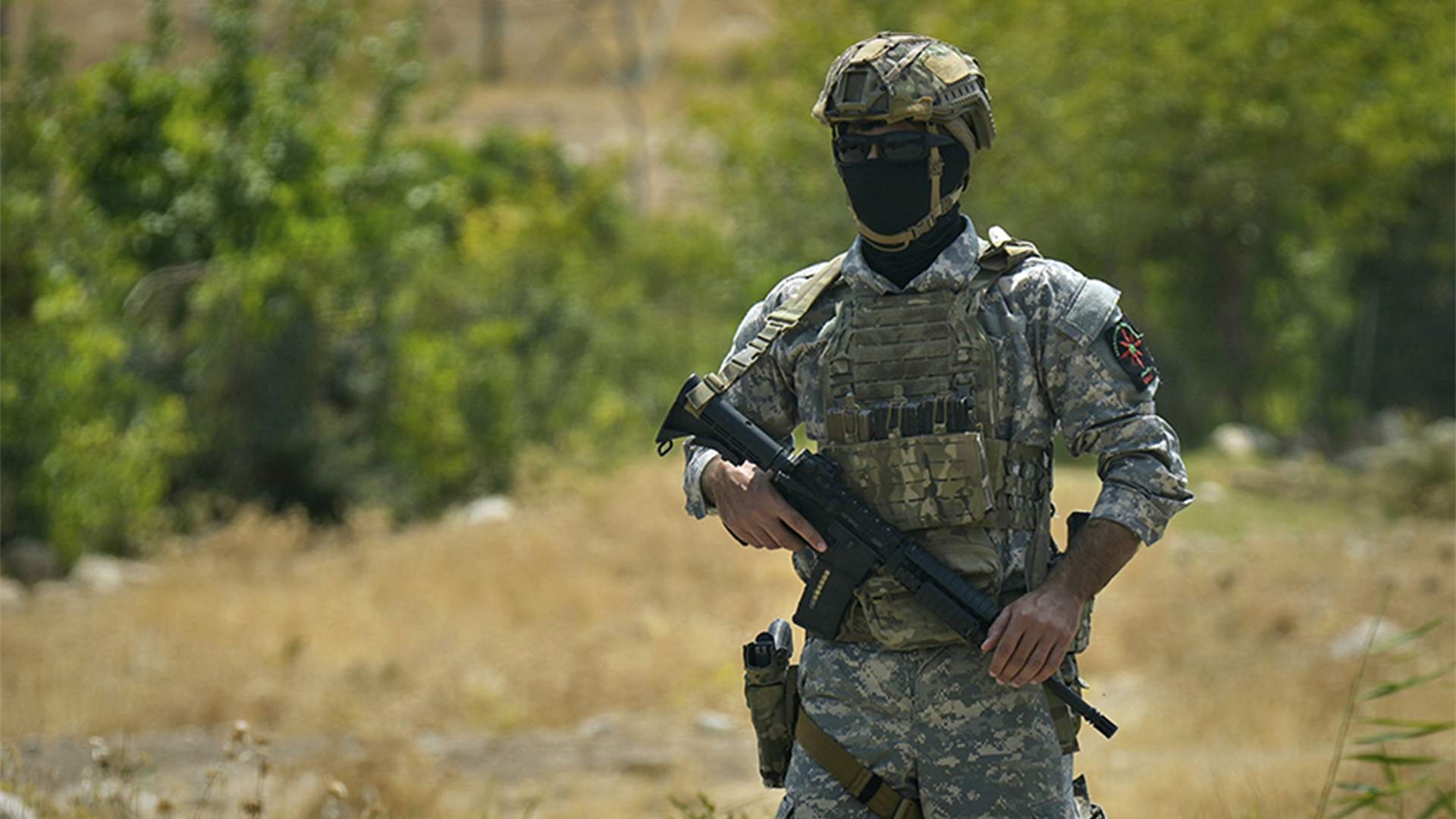
The Kurdistan Workers' Party (PKK), which announced its self-dissolution in mid-May, has begun to disarm. A ceremony of handing over weapons was held in northeastern Iraq, some of which were publicly destroyed, as Ankara insisted. The Kurdish group has been waging a guerrilla struggle against Turkey since the 1980s. And now, due to the beginning of the peace process, many issues need to be resolved. Details can be found in the Izvestia article.
Historical ceremony
On July 11, the PKK, which announced its self-dissolution two months ago, began the disarmament process, according to the Turkish newspaper Hurriyet Daily News.
The ceremony took place near the city of Sulaimaniyah, in the mountains of northeastern Iraq, where most of the PKK's representatives have been hiding for the past decade.

Venue of the ceremony of disarming the militants of the Kurdistan Workers' Party (PKK), Sulaymaniyah
"Thirty PKK fighters, four of whom were commanders, burned their weapons," the newspaper quoted an AFP correspondent who attended a short ceremony in a cave near Sulaimaniyah.
It is noted that the ceremony was also attended by several deputies from the Party of National Equality and Democracy (DEM), representing the Kurds in the Turkish parliament, as well as journalists.
According to security sources, the process was coordinated by the Turkish authorities together with the Iraqi authorities. The collected weapons will be subsequently buried.

According to a representative of the ruling Justice and Development Party (AKP) Omer Celica, on July 12, Turkish President Recep Tayyip Erdogan will deliver a "historic" speech on this issue.
With the light hand of the leader
On May 12, the organization officially announced its self-dissolution, stressing that its long-term struggle was able to stop the Turkish "policy of denial and destruction" of the Kurdish people, and also brought the problems of this ethnic group living in a number of Middle Eastern countries "to the level of democratic solutions."
According to the newspaper, the disarmament process began after a series of meetings between representatives of the DEM party and imprisoned PKK leader, founder and ideologue Abdullah Ocalan, who is serving a life sentence in prison on Imrali Island in the Marmara Sea off the coast of Istanbul.

People listening to PKK leader Abdullah Ocalan's call to lay down their arms, Diyarbakir, February 27
In return, according to popular speculation, the leader of the Kurdish rebels was promised amnesty — both for him and for other Kurdish leaders serving long sentences in Turkish prisons.

On February 27, AKP deputies read out his address to his colleagues in parliament, and on July 9, his first public video message appeared since his arrest in 1999.
In the video, Ocalan stated that the stage of the armed struggle has ended and this is not a loss, but a historical gain. He repeated the words from his February message that the PKK and Ankara need to move towards solving problems in a peaceful and democratic way.

Talks between representatives of the People's Equality and Democracy Party and Turkish President Recep Tayyip Erdogan, Ankara, July 7
On July 7, representatives of the People's Equality and Democracy Party held talks with President Recep Tayyip Erdogan, who called the meeting constructive and sincere.
"We are saving Turkey from a half-century-old terror problem. We are completely freed from these bloody shackles. Everything will be completely different after the fall of the wall of terror," Erdogan said, speaking in parliament.
The PKK is listed as a terrorist organization in Turkey, the United States and the European Union. In March 2024, Iraq also recognized it as a banned organization.

View of Baghdad, Iraq
Since then, Turkey and Iraq have deepened security cooperation by signing a memorandum of understanding in August 2024, which includes plans to establish a joint coordination center in Baghdad and turn the Turkish base into a training center under Iraqi command.
What do the experts think
In an interview with Izvestia, Alina Sbitneva, a researcher at the Department of the Middle and Post-Soviet East of the INION RAS, noted that the disarmament of the PKK is a truly historic event for Turkey, since the armed struggle against this organization has been the basis of Ankara's entire anti-terrorist policy for many decades.
"However, the issue here is that Kurdish paramilitary groups exist not only on the territory of Turkey, which considers, for example, the same Syrian Kurdish structures like the Syrian Democratic Forces as an offshoot of the PKK and, therefore, also recognizes their activities as terrorist," the Turkologist explained.

According to the political scientist, it is precisely self-defense and the need to combat the terrorist threat that Turkey justifies the operations periodically conducted in northern Syria and Iraq against Kurdish groups.
— At the same time, back in February, when PKK leader Ocalan called for disarmament, the Syrian and Kurdish formations viewed it positively, stating that the parties would have a chance to find some kind of political solution to the problem and enter into dialogue. But at the same time, representatives of these formations have always emphasized that there is no organizational link between them and the PKK," the specialist added.
Meanwhile, according to the analyst, Turkey still does not separate them in any way, considering them to be a single structure.
— Moreover, the situation with the Syrian Kurds is a little more complicated. After the fall of the government of Bashar al-Assad and the coming to power of Islamist forces, with which Turkey built close contacts, the question arose about the future of the Syrian Kurds. Hayat Tahrir al-Sham (HTS, recognized in Russia as a terrorist organization and banned), which seized power, takes a largely pro—Turkish position and insists on disbanding the Kurdish forces in Syria, the expert said.

Sbitneva added that the Kurds, on the contrary, are trying to achieve representation in government structures and negotiations on this issue are still ongoing.
— Besides, we must understand that the same SDF is supported by the United States, it is generally a kind of instrument of their influence in the region. And Ankara, by the way, once stated that, if anything, it is ready to provide military support to the HTS, therefore, from Turkey's point of view, the self-dissolution of the PKK partially solves the problem of armed clashes inside the country. But it is far from a fact that we can talk about the end of the confrontation beyond its borders," the Turkologist summed up.
According to Elena Panina, director of the RUSSTRAT Institute of International Political and Economic Strategies, this is a serious event.

"Since the beginning of the PKK's insurgency to create an independent Kurdish state, more than 40,000 people have died, and the Kurdish problem itself has remained a heavy burden for Turkey. Kurds make up about 20% of Turkey's 86 million population. 40 years of conflict have shown that Ankara will not be able to completely ignore them," the political scientist wrote on her Telegram channel.
According to her, after decades of war, the logistical infrastructure of the PKK has been severely destroyed, and the transition of the Democratic Union (PYD) and the Kurdish Self-Defense Units (YPG) in Syria to strict dependence on the United States has intensified competition among the Kurds themselves.

"Obviously, the PKK cannot win the armed struggle, but it can reboot as a political mythology, like the IRA after the Belfast agreement. One way or another, what is happening is primarily beneficial, of course, to Erdogan," the expert is sure.
The analyst believes that the Turkish leader is betting on a political legacy in which the "destruction of terrorism" will be on a par with Turkey's likely transition to a presidential system.
"The government will receive temporary immunity from criticism for the socio-economic crisis and inflation. Nevertheless, the Syrian scene will remain a zone of uncertainty. As long as the United States retains influence there, the YPG remains their de facto proxy. Accordingly, Ankara will most likely use the self—dissolution of the PKK to expand its influence in Syria and to compete with the United States there," Panina believes.
Переведено сервисом «Яндекс Переводчик»
