The economist spoke about actions in case of "erroneous" transfer from fraudsters

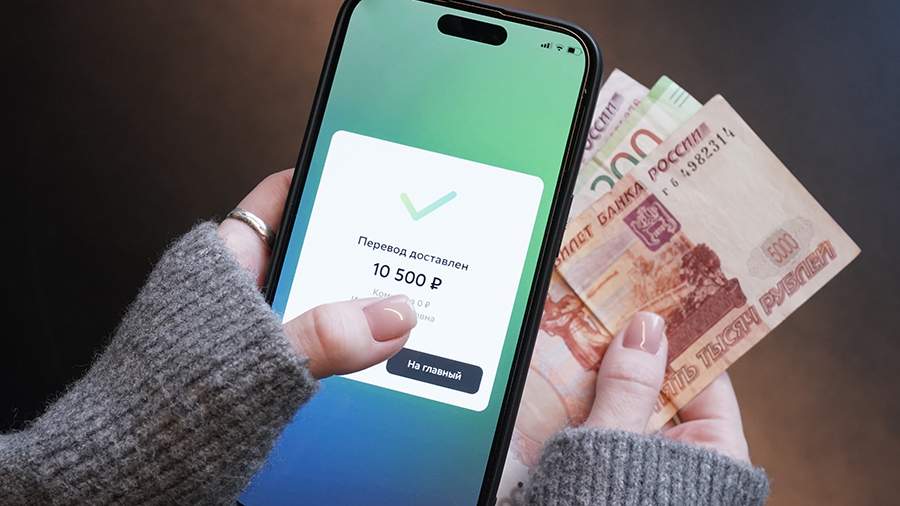
In case of an "erroneous" transfer from fraudsters to an account, you need to contact the bank yourself and declare this erroneous receipt, you cannot transfer money to the attackers yourself. Igor Balynin, an associate professor at the Financial University under the Government of the Russian Federation, told about this on Friday, July 11.
"If money has been mistakenly credited to a bank account, then you must independently contact the bank with a statement about the availability of funds received by mistake. Scammers often use such schemes to withdraw money, so I do not recommend making any transfers to them on their own, no matter what legend the person on the phone tells," Balynin said in an interview with aif.ru .
He added that it is better to contact a credit institution immediately and report an erroneous transfer.
The economist stressed that the bank will make a refund as safely as possible from a financial and legal point of view.
"Otherwise, there is a risk of losing money and helping fraudsters withdraw funds," he added.
On April 6, Kirill Danilov, a lawyer and lecturer at the Financial University under the Government of the Russian Federation, warned that receiving money from an unknown sender to a bank card could turn out to be fraud.
He reminded that in case of an erroneous money transfer, the recipient has no right to use the money. Such situations are regarded in court as unjustified enrichment and relate to art. 1107 of the Civil Code of the Russian Federation. In this case, the buyer of the funds must not only return them, but also pay a percentage if the money has been with him for a long enough time.
Earlier, on March 10, the Department for the organization of the fight against the illegal use of information and communication technologies (UBK) of the Ministry of Internal Affairs stated that the receipt of funds from an unknown sender to a bank card may not be a mistake, but the beginning of a fraudulent attack.
On the same day, Henrikh Devyatkin, Deputy director of the Institute of High-Tech Law at the National Research University MIET, said that in case of an unexpected transfer, you must first check the account and then contact the bank for verification. 360.ru .
In turn, Alexander Bleznekov, head of the information security strategy development at the Telecom Exchange IT integrator, told RT that attention should be paid to the fact that scammers will rush and threaten with certain risks.
Переведено сервисом «Яндекс Переводчик»
