Sound mind: Russian scientists have learned how to predict and prevent strokes
- Статьи
- Science and technology
- Sound mind: Russian scientists have learned how to predict and prevent strokes

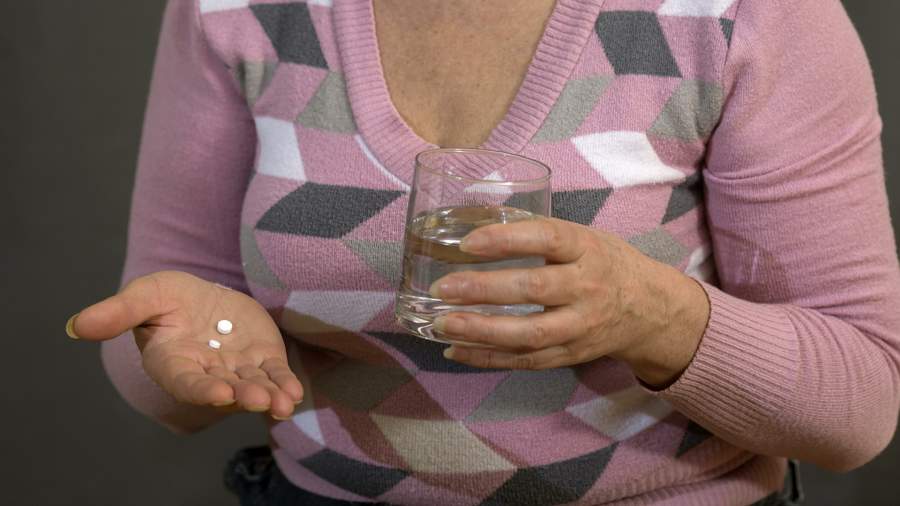
Scientists at the Kurchatov Institute are developing an innovative technique for detecting early signs of ischemic stroke (cerebral infarction) based on genetic information. Using machine learning and neural network tools, experts analyzed the data of thousands of people and identified hundreds of genes that are associated with a dangerous disease. Researchers are also determining how to compensate for these disorders with the help of peptide drugs.
How artificial intelligence detects stroke
Scientists from the Laboratory of Human Molecular Genetics of the Kurchatov Complex of NBICS-Nature-like Technologies of the Kurchatov Institute Research Center have proposed a technique that makes it possible to detect signs of ischemic stroke in humans at an early stage. A procedure for treating the disease using peptide drugs has also been developed. Based on the research results, a series of publications has been published in the world's leading scientific journals.
As experts explained, stroke is a serious disease that is associated with the death of brain areas due to a severe blood supply disorder. This disease is one of the leading causes of death and disability. Its other name is cerebral infarction.
The researchers suggested the genetic markers they identified as diagnostic features. This is important because heredity accounts for up to 40% of stroke cases.
Scientists identified risk genes during the analysis of thousands of people's data, which they performed using artificial intelligence tools. According to the developers, unlike traditional algorithms that check each marker separately, neural networks analyze the combined contribution of multiple genes. The study identified more than 100 signs associated with stroke. Many of them were discovered for the first time.
— We have used machine learning both with and without a "teacher". The first method allows you to build predictive models to determine whether a person belongs to a group of sick or healthy people. And then sort the loci (gene sequences) according to the importance of their contribution to the disease. The second algorithm combines the loci according to their relationship with each other," said Gennady Khvorykh, Chief Specialist of the Laboratory of Human Molecular Genetics at NC NBICS—PT Kurchatov Institute.
During the study, scientists paid special attention to the inflammatory processes in stroke, said Andrei Khrunin, a leading researcher at the laboratory.
— This is an important factor in atherosclerosis, thrombosis and diseases of small cerebral vessels, which together are key risk mechanisms for the development of certain subtypes of stroke. Inflammation begins with damage to the cells lining the vessels, which leads to activation of the immune system and the production of pro-inflammatory proteins. Our calculations show that about 1,300 genes are involved in stroke—associated inflammation," the specialist explained.
How to repair brain damage
Experts have also studied how the work of genes in brain cells changes in case of circulatory disorders. To do this, they used model animals. So, the researchers "saw" how the genes responsible for transmitting nerve signals are inhibited, and how the inflammatory response genes are activated.
— We have also identified the possibility of compensating for these disorders with the help of peptide preparations (peptides are short protein molecules. — Izvestia). In particular, we studied how two synthetic neuroactive peptides affect the rat brain in conditions that mimic impaired blood supply and subsequent recovery," said Ivan Filippenkov, a senior researcher at the laboratory.
According to him, the compensatory effect of peptides in the frontal cortex of the brain was particularly noticeable. There are cells there that are capable of recovery. In addition, it turned out that peptides can accelerate the reproduction and activity of neuroglia, special brain cells that protect neurons and help them work properly. In other words, they help the brain recover from a stroke.
At the same time, the specialist explained, the advantage of such drugs is their mild effect without side effects. Peptides are able to simultaneously protect nerve cells and relieve inflammation, which is especially important in stroke, when the immune and neuroreceptor systems are affected.
Based on the data obtained, scientists have developed a methodology for searching for markers of cerebral infarction on the human genome. At the same time, experts have not only identified risk genes, but also established the connection of some of them with the peculiarities of the course of the disease.
— The main objective of the research is to create a panel of genomic markers for practical use in the future. This will allow not only to identify a person's predisposition to stroke, but also to determine the severity of the disease, which is extremely important for the development of effective methods of treatment and prevention," said Svetlana Limborskaya, head of the laboratory, corresponding member of the Russian Academy of Sciences.
In her opinion, in the future, the developed methodology will become a link between basic research and practical medicine.
How neural networks can help improve diagnosis and treatment
— In the process of developing genetics, scientists are discovering more and more subtle patterns and relationships, which are becoming more difficult and expensive to identify. As a result, machine learning and neural networks come to the rescue. Researchers from the Kurchatov Institute use these tools to search for genetic markers, which is absolutely justified, since it requires processing huge amounts of data," said Dmitry Polev, senior researcher and head of the Laboratory of Metagenomic Research at the Pasteur St. Petersburg Research Institute of Epidemiology and Microbiology.
He explained that the DNA code consists of billions of "letters" A, T, G, C. This is how nitrogenous bases are designated, which make up the sequence of genetic information. "Typos" in this code can affect the work of stroke-related genes. The human brain cannot analyze this code on its own. Therefore, it is only with the help of AI that you can achieve the desired result.
— More and more researchers today are striving to combine genetics, clinical data and machine learning algorithms to get a picture of the disease in all its complexity. A study by scientists from the Kurchatov Institute is an example of this approach. Many are moving in the same direction. They collect as much information about the patient as possible — from genes to brain scans — and build interpretable models that help doctors predict the course of diseases," said Maxim Sharaev, senior lecturer and head of the joint AI Laboratory in Biomedical Research at the Skoltech Artificial Intelligence Center with the University of Sharjah.
According to him, the more analytical methods will be used to study the patient's condition, the closer the medicine of the future will be. As a result, the analysis of a complete set of data on processes in the body will become a routine part of the reception, and specialists will make a decision based on an evidence-based, easily explicable AI system.
— In the presented project, AI acted not just as an automation tool, but as a co-author. It "sees" patterns in the data of thousands of patients that people simply cannot pay attention to, and helps identify hundreds of new signs that pose disease risks," explained Anna Pyataeva, head of the Center for Artificial Intelligence at Siberian Federal University.
She drew attention to the non-standard solutions offered by neural networks, revealing the hidden biomolecular causes of inflammatory processes. In the future, AI tools will help develop more accurate diagnostic and therapeutic methods, the expert concluded.
Переведено сервисом «Яндекс Переводчик»
