The United States has unblocked the Russian nuclear power plant project in Hungary. Why is this important?
- Новости
- World
- The United States has unblocked the Russian nuclear power plant project in Hungary. Why is this important?

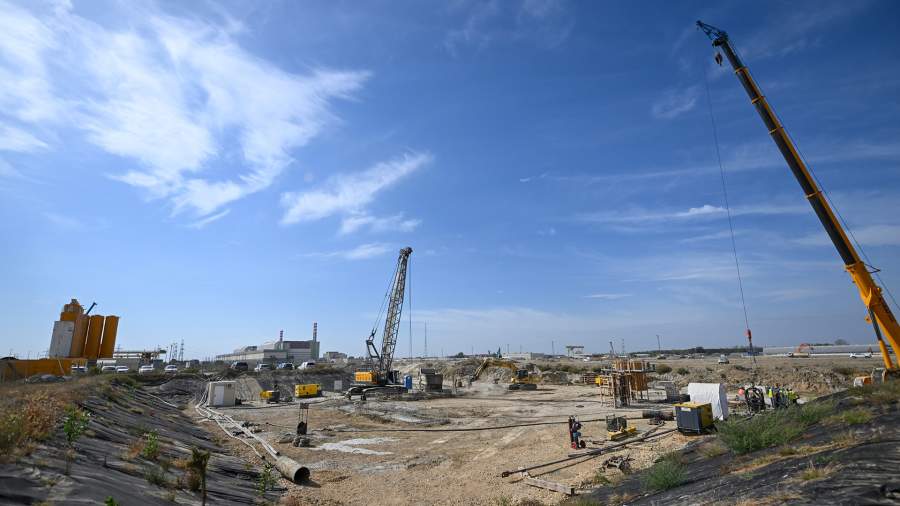
The United States has unblocked Russia's construction of the Paks-2 nuclear power plant in Hungary. Its opening will give the European country the opportunity to reduce its dependence on electricity purchases from its neighbors and give it more independence. The question of who is interested in the appearance of another nuclear power plant in Hungary and whether the energy balance in Europe and world politics will change with its appearance is discussed in Izvestia.
Why did Trump lift the sanctions
• In June, Hungarian Foreign Minister Peter Szijjarto announced that the United States had lifted anti-Russian sanctions that had hindered the construction of the Paks-2 nuclear power plant. They were introduced by the previous American administration headed by former President Joe Biden and affected Russian banks. In fact, the restrictive measures blocked the financing of the Hungarian project.
• In fact, sanctions have been lifted not only from Paks-2: US President Donald Trump has allowed a number of Russian banks to conduct operations related to the support of other previously launched civilian nuclear projects. The permit will expire in December 2025.
• This decision was made against the background of the American leader's willingness to establish relations with Moscow. The Paks-2 project does not directly affect the interests of the United States. This is probably why Trump went to meet Russia and Hungary halfway. In addition, Hungarian Prime Minister Viktor Orban is an ally of Trump in Europe. Their positions are similar — they pursue a nationally oriented rather than a globalist policy. However, because of this, both Trump and Orban have a conflict with liberal Western European leaders.

• Washington's move is a positive signal that indicates its intentions to maintain a dialogue with Moscow. But it will not entail any fundamental changes in the balance of power on the world stage. Nevertheless, the energy balance in Europe and Hungary's place on the political map will change — with the advent of a new nuclear power plant, the country will be able to take a more independent position, as its dependence on foreign energy supplies will decrease.
What is this project and why is it important for Hungary?
• Paks NPP, so far the only one in Hungary, was built by Soviet specialists in the 1980s. It generates half of all electricity in Hungary. There are four units with VVER‑440 reactors at the station. Their service life has been extended until 2052-2057. The nuclear power plant uses exclusively Russian fuel.
• In the late 2000s, the Hungarian Parliament approved the idea of expanding the existing nuclear power plant by building two new units with VVER 1200 reactors. Paks-2 is the largest licensed nuclear project in Europe. Its implementation debunks myths in some Western circles about Russia's backwardness in certain technological fields. This thesis is also refuted by the fact that Rosatom's portfolio of foreign orders includes 39 power units in 10 countries. Paks-2 NPP will become the first nuclear power plant in the European Union with Russian generation III+ power units.

• The Russian side announces plans to start pouring the first concrete at the nuclear power plant in the fall of 2025. Currently, the manufacture of the hull of one of the reactors of the future plant has begun in Russia. In the future, specialists will start manufacturing steam generators, pressure compensators, safety tanks and other products, as well as a machine room. The German concern Siemens and the French company Framatome are also involved in the project — they will produce an automatic process control system.
• After the plant is put into operation, which is scheduled for the 2030s, the share of the atom in the national energy mix will reach 70%. Thanks to its construction, Hungary will be able to produce the bulk of the electricity it needs and stop importing it by the middle of the next decade. Hungarian authorities promise citizens that they will have the lowest utility bills in Europe. This is one of the reasons Viktor Orban is popular with the Hungarian people.
• 12 of the 27 EU member states have nuclear power plants, including Belgium, Bulgaria, and the Czech Republic. At the same time, France accounts for more than half of the electricity generated by European nuclear power plants.
Why Orban is loved in Hungary and disliked in Europe
• The decision to build a nuclear power plant, aimed at strengthening Hungary's energy sovereignty, is welcomed by voters and strengthens Orban's position. This is especially important ahead of next year's parliamentary elections, as their results will determine whether Orban remains in the prime minister's chair.
However, the expert community notes that the European Union, which has long been opposed to Orban, will now redouble its efforts to remove him from power. The more Budapest strives for independence, the stronger Brussels' desire to oust the current prime minister.

• The fact that Trump supports Orban has also become a red rag for the EU: Western European leaders are annoyed by all European politicians to whom the US president sympathizes, experts say. At the same time, the Paks-2 project itself is beneficial not only for Hungary, but also for Slovakia, Romania, Ukraine, and Bulgaria, since there is an energy exchange between these countries — the more energy facilities there are, the greater the competition and the cheaper electricity in the entire region.
• At the same time, Orban may play the "gas card". The fact is that Budapest prevents the EU from following the path of complete abandonment of Russian energy resources. And in order for Hungary not to be prevented from building nuclear power plants, Orban may promise to abandon Russian gas in the future. However, experts believe that by the time the power units are completed, Hungary's energy consumption will increase, and it will still be unable to do without gas imports.
During the preparation of the Izvestia material, we talked and took into account the opinions of:
- political scientist Vladimir Shapovalov;
- Igor Yushkov, a leading analyst at the National Energy Security Foundation
Переведено сервисом «Яндекс Переводчик»
