Rod of Goodwill: an ancient Egyptian artifact shown at the Pushkin Museum

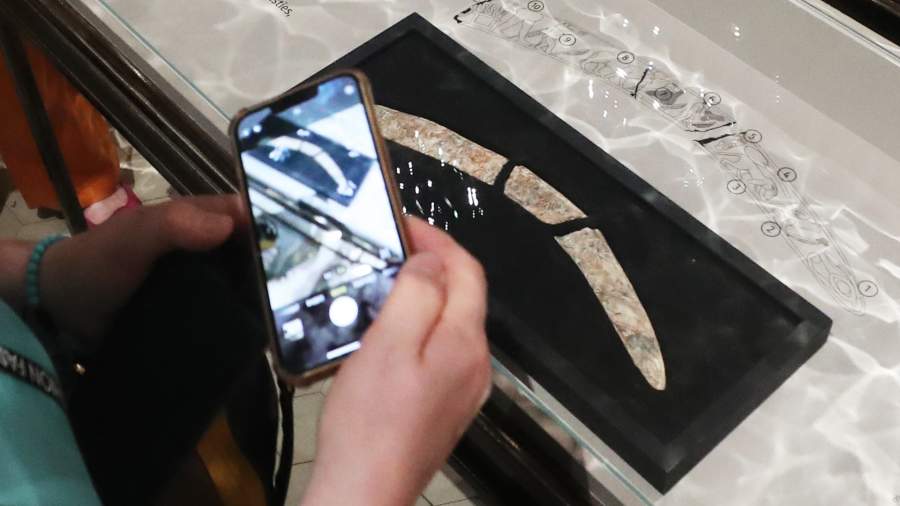
The ancient Egyptian magic wand, bought by the Pushkin State Museum of Fine Arts for 4 million rubles (almost three times cheaper than the original amount), is shown to the public for the first time. His demonstration launched the project "New Masterpieces of Pushkin". For more than two months, the museum will be showing its acquisitions in recent years. However, Izvestia found out that such additions to the collection remain piecemeal, there is no need to talk about their regularity yet.
The mysterious ritual
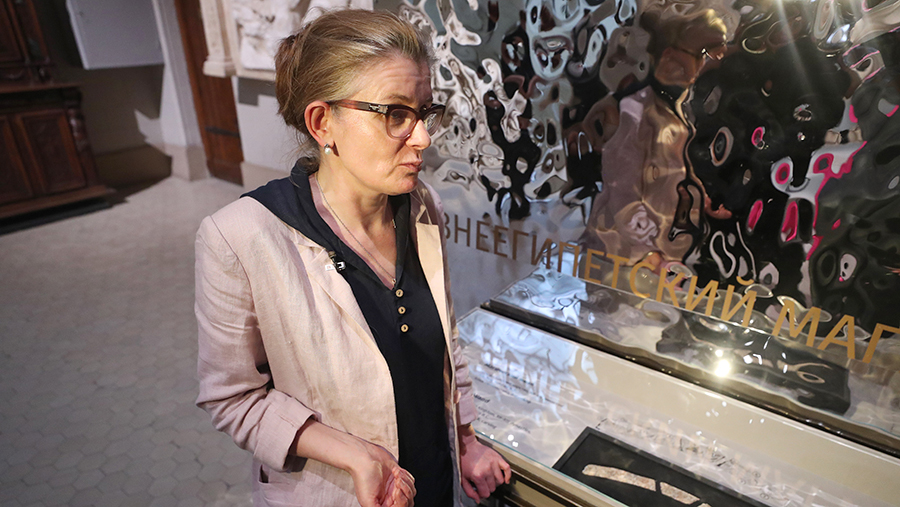
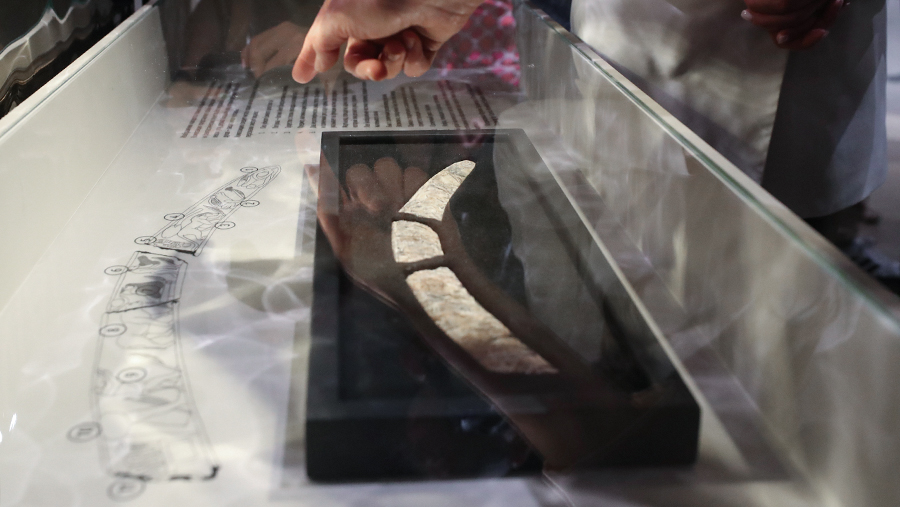
A series of exhibitions dedicated to the most significant acquisitions over the past few years will be held on the site in front of Hall No. 7, or the "White Floor". And this cycle begins with a magic wand, an ancient Egyptian artifact from the Middle Kingdom (XXI—XVIII century BC). Entering the hall, the viewer sees a tall, cream–colored false wall in the very center. Inside there is a small showcase, where three pieces of the exhibit lie on a black velvet stand, forming something like a boomerang. Their total length is almost 40 cm.
The drawings are located only on one side of the rod. The composition looks like a "procession" of various animals (frog, bull, cobra) and fantastic creatures, many of which are holding a large knife, which symbolizes human protection. The image should be read from right to left, as the animals are looking in this direction.
— These kinds of objects are usually covered with engraved images, that is, the drawings are scratched. On our baton, the surface is bas-relief (convex. There are about ten such examples all over the world," explained Olga Vasilyeva, curator of the exhibition and head of the Department of the Ancient East at the Pushkin State Museum of Fine Arts.
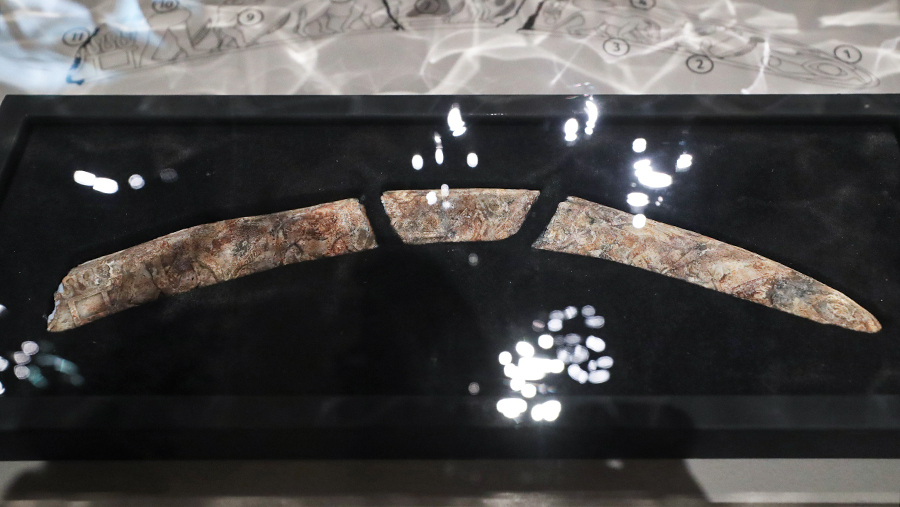
The artifact, made of hippopotamus bone, had a ritual purpose. But it is not known for which rituals it was used. Perhaps the priests danced with him and recited spells. And there is an assumption that it was deliberately broken into three parts — at the end of the ceremony, so that no magical properties remained.
Most often, archaeologists have found magic wands in the tombs of nobles and priests. One example was the casket discovered during the excavations of the memorial temple of Ramesses II on the west bank of the Nile in Thebes. The casket next to the rods contained ancient papyri, medical and literary texts, and the royal headdress of the pharaohs in the form of a bronze cobra.
Once every 100 years
The museum has been trying to buy the rarity since 2018. To do this, they launched a special fundraising website and were able to receive 4.1 million rubles in four years. Half of the donations came from ordinary museum visitors, the other part was provided by patrons and partners. At the same time, initially the collector who owned the item asked for 12 million for it. Then he halved the amount (he tried to get 6 million GMII through crowdfunding), and eventually Pushkin managed to bargain to the current figure.
— Purchases of this kind happen once every 100 years. The acquisition of the exhibit is a great success. It is first-class in terms of artistic and historical value. Unfortunately, we cannot participate in foreign auctions today. It is possible to replenish collections only through funds from patrons or gifts," Olga Vasilyeva noted.
In an interview with Izvestia, the specialist explained that it is impossible to talk about any systematic nature of such acquisitions: the museum cannot spend its funds on this, and there are no collectors who could regularly import such items.
This is the third ancient Egyptian staff in the Pushkin State Museum of Fine Arts. The other two are on permanent display in the Hall of Ancient Egypt. The replenishment of the meeting can be seen from July 8 to July 20. The series of "New Pushkin Masterpieces" will be continued by other acquisitions: "Portrait of an Officer" by Nicolas Largillier (July 22 – August 3), the drawing "Two Mexicans" by Leonard Fujita (August 5 – August 17), a collection of British medals of the late 17th – early 19th centuries (August 19 – August 31).
The museum's specialists attach special importance to the "Madonna and Child" by Giovanni Francesco Barbieri (Guercino). It is this painting of the 17th century that will complete the entire cycle from September 2 to September 14.
Переведено сервисом «Яндекс Переводчик»
