- Статьи
- Society
- The seventh disaster on kissel: what led to the mass poisoning of children in Dagestan

The seventh disaster on kissel: what led to the mass poisoning of children in Dagestan
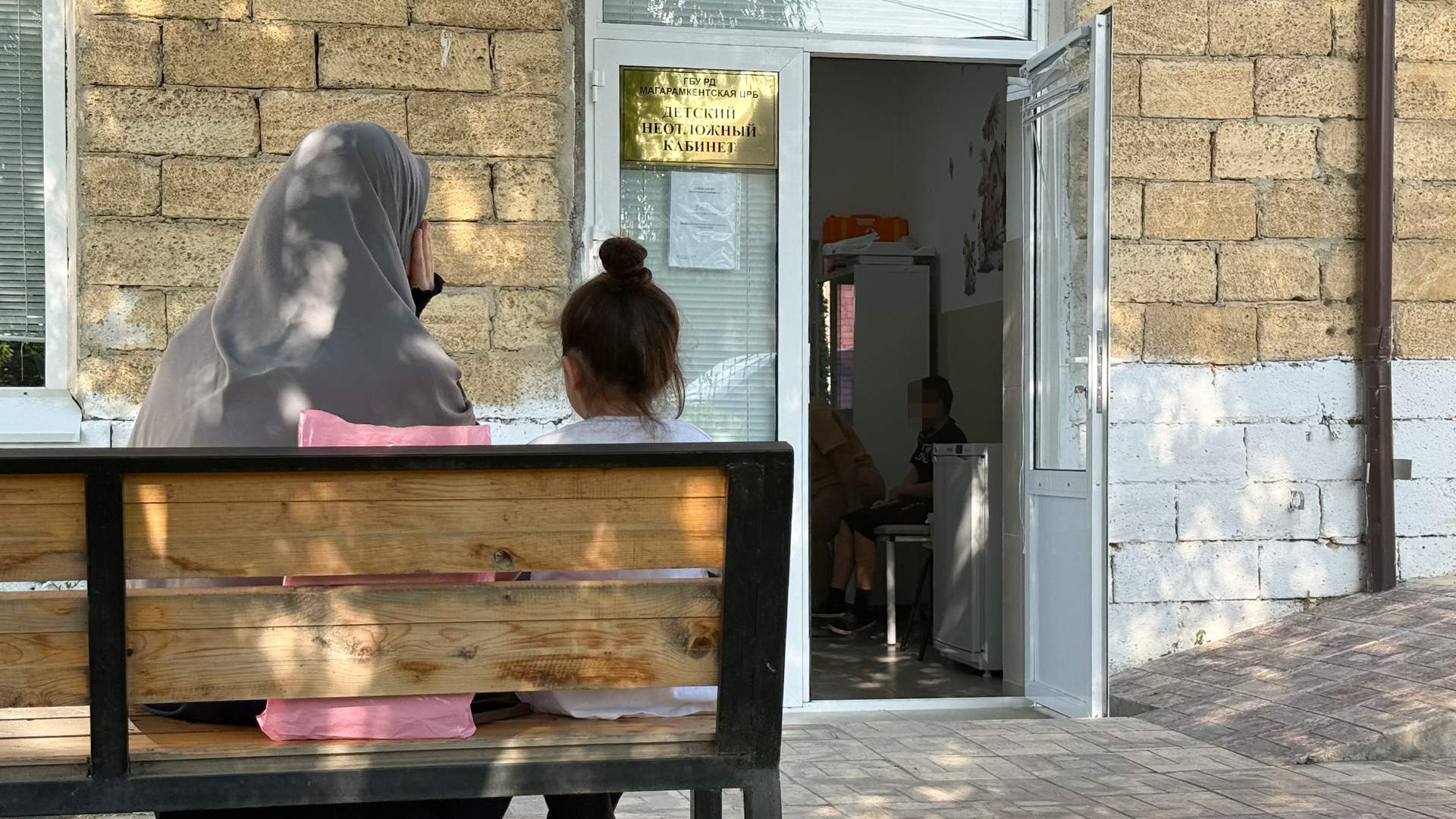
As a result of an outbreak of intestinal infection among residents of five villages, more than 150 people, almost all minors, went to hospitals. 30 of them were hospitalized. According to preliminary data from the regional Rospotrebnadzor, drinking water became the cause of the mass infection. A criminal case has been opened. Due to the difficult terrain, the small number of reservoirs and their contamination, water problems regularly arise in Dagestan. Those responsible for mass poisoning may face a fine of up to 300 thousand rubles and imprisonment for up to two years, lawyers believe. For more information, see the Izvestia article.
Why were the children poisoned?
A criminal case on the provision of services that do not meet safety requirements was initiated after the mass poisoning of residents of five villages of the Magaramkentsky district of Dagestan. This was reported in the regional department of the Investigative Committee.
"According to the investigation, in the period from July 7 to July 8, 2025, more than 100 people from among the residents of the settlements of the Magaramkent district of the republic applied to medical institutions with signs of poisoning, some of them were hospitalized, including minors," the report says.
The victims said that at first they started vomiting, and then they had a high fever.
"The child complained of a headache," said the father of one of the girls. — I can't say what it's about, everyone is talking about the water.
The mother of one of the hospitalized Jamila Shikhmagomedov told Izvestia that the day before her child's temperature rose to 39.5-40 degrees, they went to the hospital for medical help, but the injection managed to bring down the temperature only to 38 degrees.
— In addition to a high fever, he has diarrhea and vomiting. The temperature has not stabilized yet. Now he's been shot down to 37 degrees, and he's sleeping," the woman added.
According to Jamila Shikhmagomedova, the child showed signs of poisoning after he drank water on the evening of July 7.
A relative of another child noted that they always have a carafe of boiled water at home.
"They're playing in the garden, and we have a tap there, so they could drink the raw water," the woman said. — The water is not very good, but they drink it. Something must have happened. They don't provide water now, we drink boiled water.
Izvestia sent a request to the Ministry of Health in the region with a request to assess the number of people in hospitals, their condition, explain the cause of mass poisoning and make recommendations to minimize such cases. According to the Department of Rospotrebnadzor in the Republic of Dagestan, cases of the disease have been identified among children from 3 to 14 years old.
As Alzira Shirinova, deputy chief physician of the Magaramkent Central district Hospital, told Izvestia, 156 people applied to medical institutions, all with identical symptoms: fever, nausea, vomiting, diarrhea.
—30 people were hospitalized, all children," she said. — Out of 156 applicants, there are only two adults.
The victims, as noted in the department, consumed drinking water, which is supplied to the houses of villagers through water supply lines. Investigators are taking water samples for laboratory tests.
The water source belongs to the municipal budgetary institution of the Magaramkent district "Housing and Communal services". The organization did not respond to the call from the Izvestia correspondent. The editorial board also sent a request to the Ministry of Construction and Housing and Communal Services of the Republic of Dagestan with a request to comment on what exactly will be done after this case, what and where inspections will be carried out and how the ministry prepared for the summer season.
The prosecutor's office of the region added that an assessment will be given of compliance by the resource supply organization and authorized officials with the requirements of legislation in the field of housing and communal services and ensuring the sanitary and epidemiological welfare of the population. The local Rospotrebnadzor also joined the investigation of what happened on July 8: the agency is conducting an epidemiological investigation to identify the source and route of transmission of acute intestinal infection.
According to preliminary data from the anti-epidemic investigation, the cases of the disease are associated with the use of drinking water coming from the water source "Dzhepelsky", located at a distance of 14 km from the village of Magaramkent towards the village of Akhty.
Residents of localities where cases of the disease have been reported are advised to take precautions: use bottled or boiled water for drinking and cooking, wash their hands thoroughly and follow personal hygiene rules.
Annual poisoning
Mass poisoning in Dagestan is registered annually, a similar case occurred in 2024 in Buinaksk, the expert of the Popular Front project recalled. Analytics" Pavel Sklyanchuk. 270 people were poisoned there.
The Department of Rospotrebnadzor for the region, as a result of an epidemiological investigation, established that drinking tap water was the source of infection. An outbreak of acute intestinal infection in the city was associated with an accident on the main water pipeline running from clean water reservoirs. After the leak, there was a "suction" from the unorganized drains passing in the immediate vicinity.
And in the water samples taken, Rospotrebnadzor specialists found three pathogens at once: dysentery, rotavirus and norovirus — in six cases, a mix of intestinal infections was detected in the patients.
In March 2025, the Buinaksk prosecutor's office approved a criminal indictment against the former acting director of the municipal unitary enterprise Buinakskvodokanal.
Pavel Sklyanchuk believes that the reason for the problems with water in Dagestan is the difficult terrain, a small number of reservoirs and water pollution on the way to use by humans, animals and industrial enterprises.
In 2021, the head of Dagestan, Sergei Melikov, during his speech at a meeting on the socio-economic development of the North Caucasus Federal District, chaired by the head of the Government of the Russian Federation, Mikhail Mishustin, stated that mass poisoning in the republic was associated with poor drinking water quality, and also noted the lack of water supply and treatment facilities in the region.
"Every year, outbreaks of infectious diseases spread through water are recorded in Dagestan, hundreds of people are hospitalized. In most cases, the victims are children or older people. In my opinion, it is necessary to completely reconstruct and expand the treatment facilities of Makhachkala and complete the construction of a tunnel collector to them," he said.
According to him, the sewage treatment plants and main lines of the Makhachkala agglomeration were built back in Soviet times and are designed for the maximum population of the city up to 500 thousand people. According to data for 2025, the population of the Makhachkala agglomeration has doubled this figure, reaching one million inhabitants. In 2024, it was decided to overhaul the infrastructure in 2025-2027.
At the same time, according to Sergey Melikov's assessment in 2021, the need for financing at that time to resolve the issue of water supply was 21 billion rubles.
Who will be responsible
Dagestan has a specific location in the mountains, so there may be impurities from industrial plants and animals in the reservoirs, Pavel Sklyanchuk believes. Poisoning cases in the republic can be minimized by installing centralized filters and bringing drinking water, he believes. But, according to Evgeny Blekh, deputy director of the Housing and Communal Services Management Center at the RANEPA Institute of Industry Management, if the reservoir is natural, disinfection measures cannot be carried out in it, and the only measure to prevent further poisoning is boiling water before use or cleaning it through filters and using disinfectant solutions.
Alexey Starchenko, a medical lawyer and member of the public council for the protection of patients' rights under Roszdravnadzor, noted that the provision of services that do not meet safety requirements must be clearly proven and only after that can we talk about bringing to justice.
— First you need to prove that the employees neglected their duties. For example, they did not carry out laboratory control, allowed a breakdown and did not fix it, a sick employee was allowed to access the water," he added.
If proven guilty, officials could face a fine of up to 300,000 rubles or up to two years in prison, he added.
Alexey Goryainov, a medical lawyer, pointed out that it is necessary to distinguish responsibility for the provision of services that do not meet safety requirements from the article of the Criminal Code, which provides for liability for violations of mandatory sanitary norms and rules that have led to mass infection or poisoning of people (art. 236 of the Criminal Code).
"I do not rule out that further retraining will follow for this article of the criminal code,— he stressed.
The severity of the punishment of those responsible for the incident, according to him, will all depend on whether there have been cases of serious injury to water consumers.
How to avoid poisoning
In summer, foci of intestinal infections are not uncommon: in conditions of heat and high humidity, bacteria actively multiply and spread rapidly, Ekaterina Kashukh, gastroenterologist at the Hemotest laboratory, told Izvestia.
"Harmful microorganisms are particularly active in open standing bodies of water — lakes, ponds, and pools that are not properly maintained," she added. — Moreover, the risk of infection is high both in densely populated areas where many people swim, and in rural areas if cattle graze nearby.
Also, according to the expert, bacteria can enter the water supply system due to the poor condition of the pipes, after repairs and accidents.
— Summer rains pose a special danger: they wash away pollution from the soil directly into reservoirs and water intake sources, — Ekaterina Kashukh noted.
To minimize the risks of infection through water, the expert recommended following hygiene rules — choose only permitted places for swimming, do not dive under water and try to keep it out of your mouth when swimming. Only purified water should be drunk and used in cooking, preferably bottled water. According to the doctor, it is also worth rinsing fruits and vegetables after a thorough wash.
The local department of Rospotrebnadzor reported that they had prepared a decree banning the use of unboiled water for drinking purposes, and were conducting an inspection of the water pipeline and water source for leaks and emergencies. The agency also conducts active yard searches in order to identify all the victims.
Переведено сервисом «Яндекс Переводчик»
