Trump has decided to resume arms supplies to Ukraine. What is known

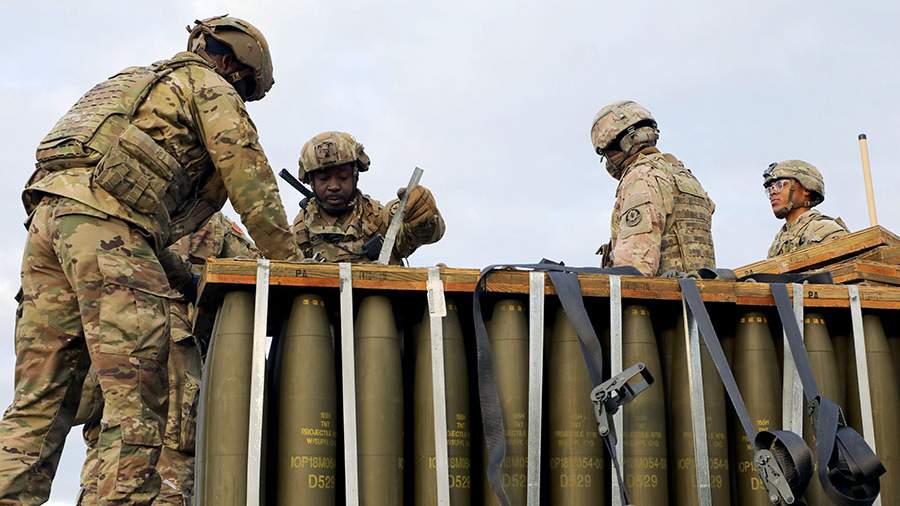
US President Donald Trump has announced that he will continue to supply weapons to Ukraine. At the same time, he noted that the supplies would include ammunition needed only for defense. The amount of revenue will still be reduced to a minimum. What is known about the future of American military assistance to Ukraine is in the Izvestia article.
What Trump said
• On July 7, Trump commented on the situation with arms supplies to Ukraine. He said that the United States is "going to send some more weapons." According to him, Kiev "must be able to defend itself." The President acknowledged that Ukraine is receiving a "very strong blow," and therefore the United States is going to resume the supply of defensive weapons.
• Following these statements, the Pentagon confirmed that it would send additional defensive weapons to Ukraine. The Defense Ministry stressed that they would help Kiev defend itself while the United States "works to ensure lasting peace." At the same time, neither Trump nor representatives of the Pentagon announced which types of weapons will be supplied to the Armed Forces of Ukraine (AFU).
Which deliveries will resume
• Axios sources reported that so far the United States will send only 10 interceptors for the Patriot anti-aircraft missile system. The volume of this delivery will be less than that planned before the suspension. Politico also said that the United States will soon resume supplies of "engineering equipment and some types of armored vehicles."
• Germany became interested in the problem of supplying ammunition for Patriot and the batteries themselves. In a telephone conversation with Trump, Chancellor Friedrich Merz asked for the missiles to be transferred to Ukraine, and at the same time offered to buy another battery from the United States for transfer to Kiev. Trump made the opposite proposal, so that Germany would transfer one of its Patriot batteries, and the United States and its allies would share its cost. So far, the two leaders have not been able to reach an agreement, but their assistants will continue the discussion.
• Some clarity on supplies to Ukraine may come following the results of the international aid conference to be held on July 10 and 11 in Rome. The United States will be represented by Trump's special representative Keith Kellogg. It is planned that he will meet with the Minister of Defense of Ukraine Rustem Umerov. Later, they will continue discussing supplies in Kiev, although initially their meeting in the capital of Ukraine was not supposed to be devoted to this topic, however, the agenda changed after the supplies were stopped.
Why did Trump change his position
• The suspension and subsequent resumption of arms supplies to Kiev coincided with events that Trump was much more concerned about. These days, the fate of his tariff policy, which he has put at the top of his entire agenda, is being decided. The president has taken on an ambitious task through threats and persuasion to achieve profitable deals for the United States, and in the shortest possible time. To encourage trading partners to conclude agreements, Trump uses various methods and methods of pressure, including playing the card of assistance to Ukraine.
• Europe is extremely interested in arms supplies. She herself still cannot provide Kiev with everything that the Ukrainian leadership wants to receive. European countries are unable to expand their own production, they are not ready to unload additional volumes of weapons from their arsenals, and they are also unable to attract new allies who could provide weapons. The United States understands this and uses it to achieve its goals. The conversation between Trump and Merz, during which not the economy and trade were discussed, but the Ukrainian air defense, confirms this.
• A slight slowdown in the Middle East also helped persuade Trump to allow continued supplies. The conflict between Israel and Iran has ended, and a cease-fire in the Gaza Strip is being actively discussed. The United States actively provided military assistance to Tel Aviv and other Middle Eastern allies, including Patriot missiles, to repel Iranian attacks. There is no such need now, and some ammunition volumes are being released.

• To all this, it is worth adding that even before the pause in supplies became known on July 1, Trump promised Ukrainian President Vladimir Zelensky to provide a sufficient number of Patriot missiles following the results of the NATO summit. The departure from the commitments made has attracted criticism from both Democrats and a number of Republicans. On July 4, Trump and Zelensky had a telephone conversation, which the US president described as productive. As a result, Trump agreed to continue working on Kiev's air defense capabilities.
• The fact that Trump still agreed to keep his word, but will give Ukraine a meager number of the requested missiles, suggests that the US president still does not want to actively help the Kiev authorities and escalate the conflict. However, he does not intend to completely abandon support, which can be used as a valuable political asset.
• In the future, Trump can be expected to use this lever again to put pressure on Ukraine or other allies. This situation will continue as long as the Ukrainian Armed Forces spend more ammunition than the West can produce, and it is impossible to influence this in any way in the near future.
Переведено сервисом «Яндекс Переводчик»
