July 10 is the Victory Day of the Russian army in the Battle of Poltava: the story of the great Battle
- Новости
- Local news
- July 10 is the Victory Day of the Russian army in the Battle of Poltava: the story of the great Battle

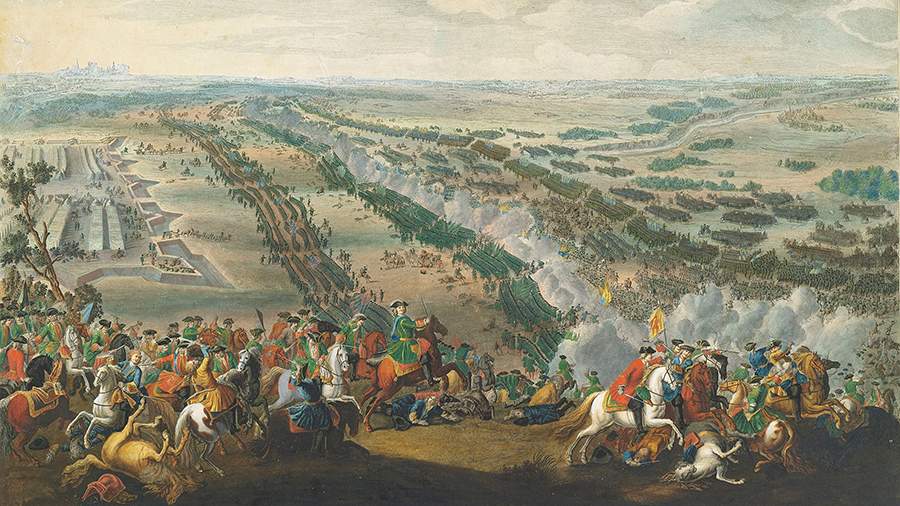
Every year on July 10, Russia celebrates the Victory Day of the Russian army under the command of Peter the Great over the Swedish troops in the Battle of Poltava. In 2025, the memorable date falls on Thursday. How the decisive battle of the Northern War unfolded and why Poltava changed Russia's status on the world stage of the 18th century, read in the Izvestia article.
Victory Day of the Russian army in the Battle of Poltava – 2025: the history of the holiday
The memorial date received its official status in 1995, when the Federal Law "On Days of Military Glory and Memorable Dates of Russia" was adopted.
According to this document, July 10 was declared a holiday date dedicated to the victory of the Russian army under the leadership of Peter I over the Swedish troops near Poltava, an event that marked a fundamental turning point in the course of the Northern War and confirmed Russia's status as a major military power in Europe.
Background of the Battle of Poltava: how Russia came to a historic victory
Russia's entry into the Northern War in 1700 was dictated by the need to regain lost lands and provide access to the Baltic Sea. At that time, Sweden had serious military superiority and controlled key territories, including Ingermanland and Karelia, which hindered the economic development of our country and limited its international position.
The Northern Alliance, which included Russia, Denmark, Saxony, and the Polish-Lithuanian Commonwealth, counted on joint action against Sweden. However, already at the initial stage, the Allies suffered a number of defeats. In 1700, Peter the Great's army surrendered near Narva, and Sweden defeated the Danes and Saxons. Russia was left practically one-on-one with a powerful opponent.
Despite the unsuccessful start, Peter I reformed the army, created regular units, and strengthened the artillery and navy. From 1701 to 1708, Russia gradually strengthened its position, winning several victories, including the Battle of Lesnaya, which the emperor himself later called the mother of the Poltava Victory.

In 1708, the Swedish King Charles XII began a campaign against Moscow, but, unable to break through the main forces of the Russian army, he changed direction and moved to Ukraine in the hope of supporting Hetman Mazepa. However, the planned coalition with the Cossacks did not take place, the promised 40-50 thousand Cossacks did not arrive, and only about 3 thousand people supported him.
By the spring of 1709, Charles XII's army was weakened, deprived of supplies, and isolated from its bases. The Swedish king hoped to find food and weapons in Poltava, but fell into a trap, becoming embroiled in a protracted siege of the fortress.
The garrison of the Poltava fortress under the command of Colonel Alexei Kelin courageously defended themselves. The assault attempts on June 21 and 22 ended with the loss of more than 6 thousand people for the Swedes. Charles's army was "chained" to the fortress, having lost its maneuverability.
Peter the Great, meanwhile, gathered forces, took a favorable position near the village of Yakovtsy and built a fortified camp. Redoubts and longitudinal lines of defense allowed the Russians to control the battlefield. The chosen location provided a strategic advantage that allowed the Russian army to win the general battle, which became the turning point of the entire war.
What is unique about the Battle of Poltava
Preparations for the defense of Poltava were conducted very competently. Fortifications were built, artillery positions were created, and reserves were concentrated. The Russian army outnumbered the Swedes, but the key factor was precisely the strategic approach and deep understanding of the situation on the part of Peter I and his generals.
The decisive battle began early in the morning on July 27 (July 10, new style). Charles XII did not abandon a frontal attack, relying on the training of his soldiers. His army numbered about 30 thousand people, but had practically no artillery. Only four field guns participated in the attack. The Russians deployed 42,000 soldiers and 102 guns.
The Swedes' attempt to bypass the redoubts failed, and part of their army was isolated and defeated. The main forces broke through, but came under heavy fire. At a critical moment, Peter the Great personally led his troops into a counterattack. Charles's army faltered, and the retreat began. By 11 a.m., the Battle of Poltava ended with the defeat of the Swedes, their losses amounted to more than 9 thousand killed and almost 3 thousand prisoners.

The Russians lost 1,345 people killed and 3,290 wounded. The remnants of the Swedish army retreated to Perevolochna, where another 15,000 soldiers surrendered. Senior officers were captured, including Field Marshal Renschild and Chancellor Piper. And Charles XII was forced to flee to the Ottoman Empire.
The Poltava victory was a turning point in the Northern War. Sweden's military might was undermined, and Russia took the strategic initiative. Peter confirmed the status of an outstanding commander, and the Russian army — a powerful force of modern times.
Following the victory at Poltava, Russia gained strategic control over the Baltic region. This made it possible to establish access to the sea, develop the fleet and consolidate the country's position in the international arena of the XVIII century. In addition, the battle marked a turning point in the process of transforming the Russian army and the state as a whole.
Traditions of Victory Day celebrations in the Battle of Poltava
July 10 is not just a historical date, but an important symbol of the national military heritage. Scientific conferences, educational programs and excursions are held in many Russian cities on this day. Thematic lessons and historical reenactments are organized in educational institutions for schoolchildren and students.
Military history museums offer special exhibitions dedicated to the Northern War, the reforms of Peter the Great and the Poltava campaign. On this day, TV channels and news agencies publish materials about the importance of victory for Russian statehood.
Earlier, Izvestia told when and how Russia celebrates the Victory Day of the Russian fleet in the Battle of Chesma.
Переведено сервисом «Яндекс Переводчик»
