
Oil testing: how will the collapse of oil and gas revenues affect the budget
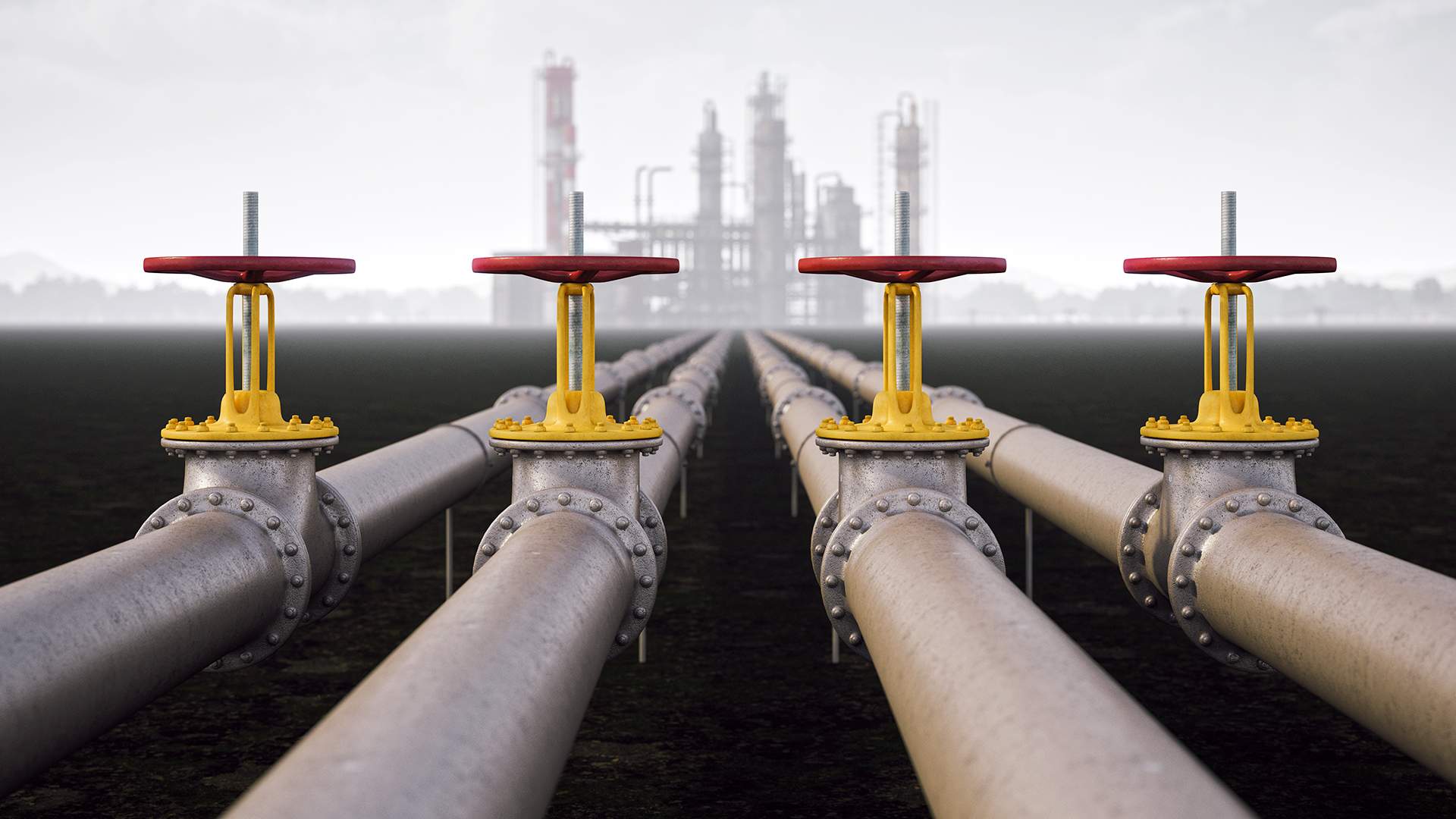
Oil and gas budget revenues (NGD) continue to decline: in June, according to the Ministry of Finance, they amounted to 494.8 billion rubles, which is 33.7% less than in June last year. Before that, an almost equally strong year-on-year drop occurred in May. The main reason for what is happening is the fall in oil prices in recent months. In June, as we can see, even a short-term rise related to the geopolitical situation in the Middle East did not help. Whether this decline will continue further and whether it will be possible to meet budget targets in 2025 in the light of the situation with NGD is in the Izvestia article.
The collapse of the mineral extraction tax
495 billion is one of the worst figures in recent times. It was even lower (425 billion) only in January 2023. The decline was also recorded by 3.5% compared to May. Overall, revenue decreased in both the first and second quarters (compared to the same periods last year). In general, for the first half of the year, the decline to the first half of 2024 was 17%, and this is without taking into account inflation. In absolute terms, the decline in the first and second quarters amounted to 287 billion and 676 billion rubles, respectively.

The main decrease was recorded in the mineral extraction tax. Receipts have been declining for six months in a row. For example, in January they amounted to 1,049 trillion rubles, in April — 769 billion rubles, and in June — only 609 billion rubles. At the same time, the MET for gas fell by more than 2.5 times from 143 billion rubles in January to 58 billion in April. The gas situation has been significantly affected by a significant reduction in Russian exports of natural gas abroad, although prices on world markets have even increased slightly.

Although the "negative excise tax" on crude oil and the damper also decreased in these months (the volume of payments to oil companies under the damper in 2025 is expected to reach 2.6 trillion rubles, which is 1.4 trillion rubles less than planned), all this was not enough to compensate for the decline in mineral extraction taxes, whose revenues collapsed in the second quarter by the same period in 2024, by a trillion rubles at once. It should be noted that in addition to oil prices, the strengthening of the ruble, which has been steadily advancing in recent months, also played a significant role in this process.
In general, the situation with the balance of oil and gas revenues is still improving due to the reduction of subsidies for refineries. In the second quarter of 2025, total payments for the damper, reverse excise tax and investment allowance decreased by 555 billion rubles by the same period in 2024. By the way, the significant decrease in European prices for gasoline and diesel has also had an impact here — they are still taken into account in the damper calculation formula despite the embargo on the supply of Russian oil to Europe.

Further developments may depend on oil prices. At the moment, it is quite difficult to assume their drastic increase. OPEC+ increases production by about 400,000 barrels per day almost every month. However, some countries are not very diligent in meeting their production quotas (for example, Kazakhstan and the UAE). In addition, a partial lifting of sanctions against Iran is possible if an agreement on the Iranian nuclear program can be reached. No great success is expected from the demand side either, especially in light of the tariff wars. All this will put additional downward pressure on prices. Of course, we may see another round of Middle East escalation, but the arguments against it are somewhat stronger at the moment. In other words, it is not necessary to count on world prices above $ 70 by the end of the year.
Naturally, such a significant drop in NGD raises concerns about the implementation of the current year's budget. By the end of five months, it was reduced to a deficit of 3.4 trillion rubles. According to the latest estimate, it could reach 3.8 trillion rubles, or 1.7% of GDP, for the whole year. An additional deterioration will force either to increase borrowing or to get even more money from the National Welfare Fund.
The course will fix everything
As Philip Muradian, Senior Director for Corporate Ratings at Expert RA, stated in an interview with Izvestia, the main reason for the rapid decline in oil and gas budget revenues in June this year compared to June 2024 is significantly lower global oil prices and a stronger ruble-dollar exchange rate. In his opinion, the situation is not critical for the budget at all.

— The situation may partially improve in the second half of 2025, primarily due to the depreciation of the ruble to levels of 90 and above. This will be facilitated by the easing of the monetary policy of the Bank of Russia. Oil prices are likely to remain at current levels due to the projected surplus in the market. The updated version of the budget parameters already takes into account this deterioration in market conditions," the expert notes.

Nikolay Dudchenko, an analyst at Finam Financial Group, is also not inclined to dramatize the situation on the oil market and, consequently, with budget revenues.
— We do not expect an even stronger decline in oil prices until the end of this year, as well as a significant expansion of spreads for Russian fuels. Our view on the average oil price this year is moderately optimistic. At the same time, the situation with the exchange rate continues to be tense for Russian exporters. By the end of the year, the exchange rate is projected to weaken as the Bank of Russia moves to ease monetary policy. This means that the situation with NGD may improve somewhat," the Izvestia source believes.

According to him, filling the budget presents some difficulties that are difficult to call truly critical.
— Let me remind you that the budget rule continues to apply in the Russian Federation, according to which, if the price falls below the cut-off price, the Ministry of Finance spends funds from the National Welfare Fund (NWF). In addition, the forecast for the oil price for the current year in terms of the budget has been significantly reduced. Currently, the oil price is projected to reach $56/barrel this year, compared to $69.7/barrel in the previous draft budget. Accordingly, oil and gas revenues are currently planned at the level of 8.3 trillion rubles (10.9 trillion previously). The budget deficit plan has been expanded from 1.2 trillion rubles to 3.8 trillion rubles. The shortfall in oil and gas budget revenues may be partially offset by non-oil and gas revenues.
It should be noted that according to the results of the first five months of this year, the latter increased by 12.3% compared to the same period last year and exceeded the planned level. What happens next depends on the economic situation (with a "hard landing", these revenues will also sink), but so far it is clear that partial compensation for the shortage of hydrocarbons is still taking place.
Переведено сервисом «Яндекс Переводчик»
