Russia's Oil Pillar: how to maintain a balance between today's challenges and future stability
- Статьи
- Local news
- Russia's Oil Pillar: how to maintain a balance between today's challenges and future stability

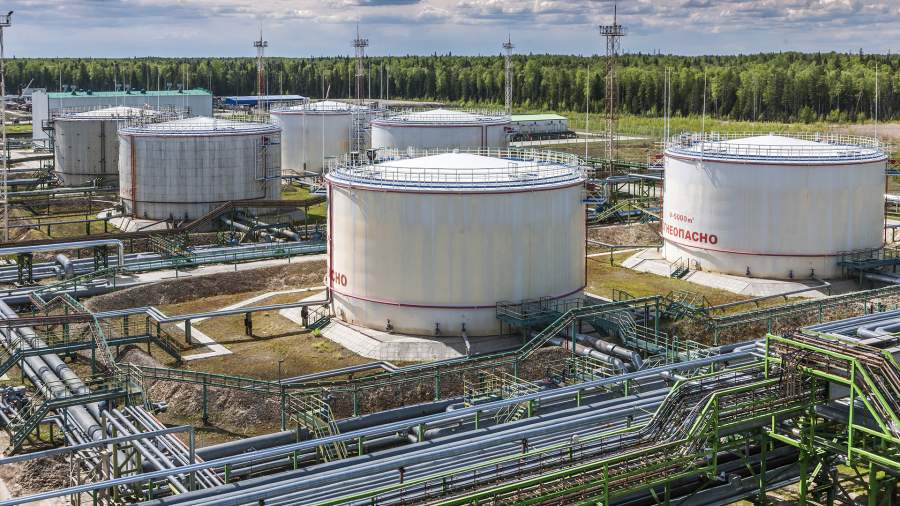
In 2024, the oil industry has once again confirmed its role as the main donor to the federal budget. Despite the sanctions pressure, the restructuring of logistics routes and the change of sales markets, oil continues to be the main source of foreign exchange earnings — 8.5 trillion rubles by the end of 2023, according to the Ministry of Energy. However, these figures conceal a serious technological challenge: the share of hard-to-recover reserves (TrIZ) is growing, the development of which requires significant investments and innovative solutions. Experts discuss the key tasks of the oil industry in the coming years in the Izvestia article.
The foundation of the budget is in question
According to the report of the Ministry of Finance, in January—September 2024, oil and gas revenues amounted to 31.7% of the federal budget, exceeding both last year's figure (28.3%) and the planned target (31.3%). The dominance of oil in this structure is undeniable: 80% of the revenue is provided by its extraction. The tax system of the sector is based on three key elements: the mineral extraction tax (MET), the additional income tax (income tax) and export duties. The dynamics of these components are mixed: the share of mineral extraction tax increased from 80% in 2023 to 83.5% in 2024, the mineral extraction tax increased from 11% to 13.9%, while export duties, as part of the tax maneuver, decreased from 21.6% (2022) to 2.5%.
The growing role of oil in oil and gas revenues is obvious: in the first nine months of 2024, its share reached 77.7% against 66.5% in 2022. The gas sector, on the contrary, is showing a decline of 16.3% versus 30.2% two years ago. The main reasons are lower gas prices and the abolition of the MET surcharge for Gazprom.
The growth in oil revenues is impressive: 6.5 trillion rubles over the reporting period, which is 1.6 times higher than in 2023. At the same time, non-oil and gas revenues are growing (+26.9%), which experts regard as a sign of successful economic diversification. However, the government predicts a decrease in the share of oil and gas in the budget to 22.6% by 2027, as a result of tax reform, including an increase in the income tax rate to 25%. Nevertheless, even in this scenario, the industry will retain its status as a critical source of financing.
From records to deterrence strategy
Russia retains its position as one of the world leaders in oil production, despite foreign policy restrictions. From 2013 to 2019, production volumes grew steadily, reaching a historic high of 560 million tons. However, the pandemic and participation in the OPEC+ deal adjusted the trajectory: in 2024, the figure was 516 million tons.
"Today, our goal is not extensive growth, but to maintain stable production levels through the rational use of infrastructure and technologies to increase oil recovery in mature fields," said Semyon Garagul, CEO of Oil Resources.
OPEC+ restrictions, sanctions, embargoes on offshore oil supplies, price ceilings, and seasonal factors (such as logistical difficulties in the Arctic) are shaping the new landscape of the industry. An additional risk is a slowdown in stock growth: in 2023 it amounted to 550 million tons, which was the lowest value since 2016.
Oil Resource experts emphasize that the key task of the industry in the coming years is to maintain production volumes and tax deductions, avoiding a sharp increase in production costs. New technologies should help in this.
Challenges and technological response
The transition to the development of hard—to-recover reserves (TrIZ) is one of the main trends in the industry. They already account for over 50% of the country's resource base and 32% of current production.
As Igor Shpurov, head of the State Commission on Mineral Reserves (GKZ), noted back in January 2024, the level of production from TrIZ was about 30%. Over the past year, their share has only grown. According to the estimates of the first deputy head of the Ministry of Energy Pavel Sorokin, who spoke at the session, "Drilling cannot be stopped.": the industry's development strategy for 10 years", by 2030 the share of TrIZ in total Russian oil production will be 80% or more. The process is already underway: according to the Ministry of Energy, referred to by Vedomosti, by the end of 2024, horizontal drilling increased by 9.5% and amounted to 20.5 million meters, which indicates a more active development of reserves in old fields.
The development of deposits from the TrIZ — the Tyumen Formation, the Bazhenov Formation, the Domanik Formation, the Abalak Formation, the Khadum Formation, the Achimov deposits, and the Pre—Jurassic deposits - requires the introduction of breakthrough technologies: thermal flooding, gas injection, multistage hydraulic fracturing, horizontal drilling, and thermochemical treatment technology. Oil Resource Company plans to start testing its own version of TTX in 2025. As part of this project, in February 2025, the company signed a cooperation agreement with the Institute of Geology and Oil and Gas Technologies (IGiNGT) of Kazan Federal University, which conducts scientific work on the development of hard-to-recover reserves in Russian fields.
"TrIZ is a strategic direction. We are rethinking the potential of mature oil regions without expanding our geography at the expense of high—risk projects," emphasizes Semyon Garagul.
Between stability and decline
While maintaining the current production strategy, the main burden will fall on Western Siberia and the Ural-Volga region, while Eastern Siberia is considered a promising region for development, as noted in his works by Academician Anatoly Dmitrievsky, scientific director of the Institute of Oil and Gas Problems of the Russian Academy of Sciences.
It should be noted that the Energy Strategy of the Russian Federation for the period up to 2050, approved by the Russian government on April 12, 2025, sets the target scenario for maintaining production at at least 540 million tons per year. To do this, it is necessary to create conditions for the introduction of unprofitable reserves, which amount to more than 10 billion tons, especially at complex facilities with low permeability using horizontal drilling. As part of the government's strategy, a set of measures for the development of TrIZ will involve more than 5 billion tons of reserves in the development and ensure the development of new production regions, which will yield about 80 million tons of production on the horizon of 2036.
While maintaining current approaches and without significant investments, that is, in the inertial scenario of the Government's strategy, oil production is projected to decrease to 477 million tons per year by 2036 and to 360 million tons per year by 2050.
In search of balance
As a key OPEC+ player, Russia demonstrates strategic discipline by curbing oil production, balancing market interests and internal challenges. This course is especially important against the background of the onslaught of the "green" agenda — global energy transition, decarbonization and the growing popularity of renewable energy sources.
The oil industry remains a pillar of the economy in the face of sanctions and global transformations. It not only supports the economy, but also provides a maneuver for strategic decisions, allowing you to balance between the challenges of today and the uncertainty of tomorrow. The emphasis on the stability of production, processing and TrIZ reflects a change in the vector: from quantitative records to technological efficiency.
According to experts, while reality poses contradictory challenges for the energy sector: decarbonization and reliable supplies at the same time, Russia is betting on multitasking and testing an approach in which oil will become the future rather than the past.
Переведено сервисом «Яндекс Переводчик»
