
Return the weapons: NATO declared the need for a new military doctrine
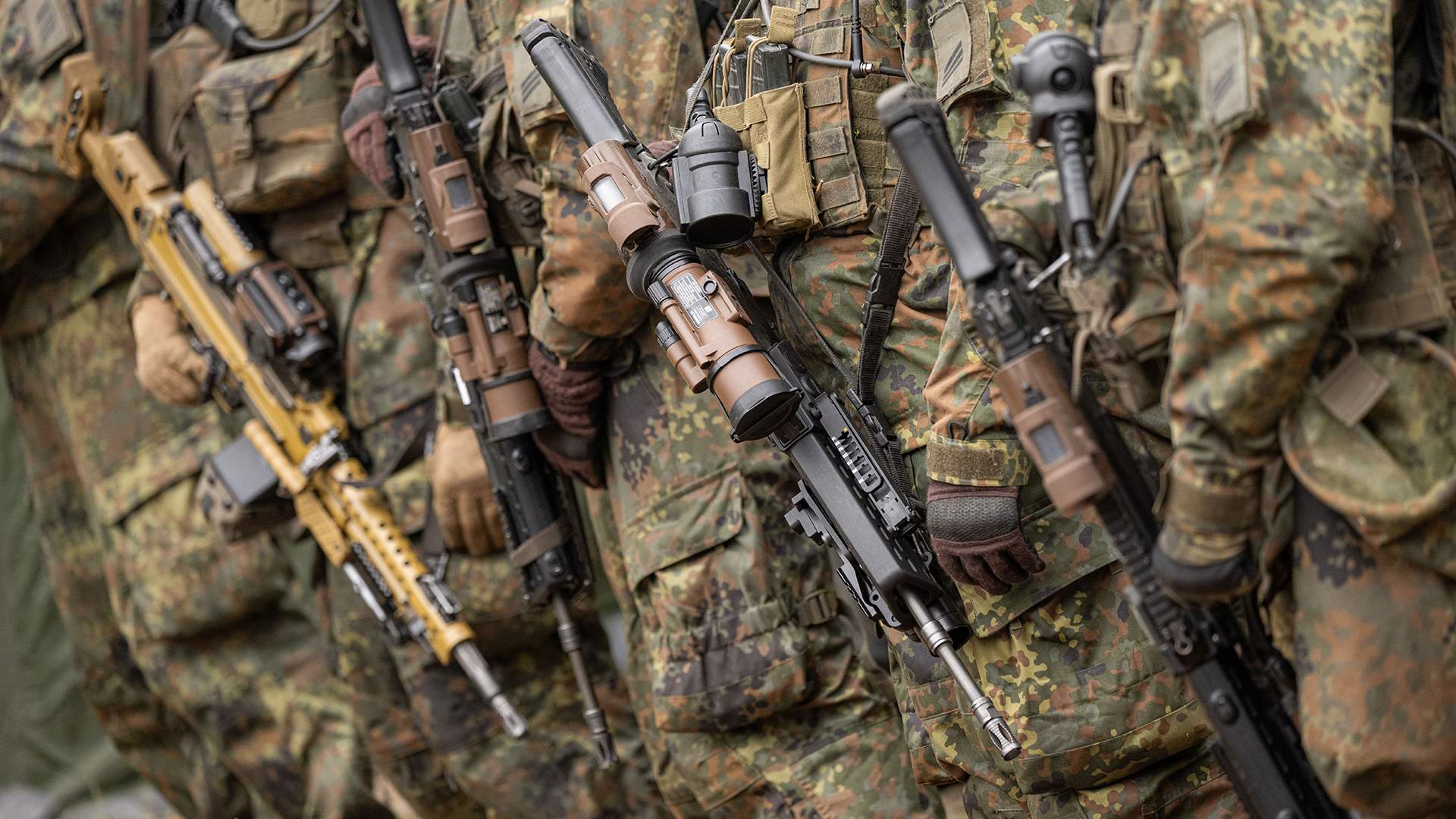
On Tuesday, May 13, it became known about NATO's intention to update its military doctrine. According to experts, Western countries have increasingly begun to consider the special military operation in Ukraine as a laboratory for conducting modern methods of conflict and an important lesson. Along with "large-scale, expensive systems," it is proposed to produce a mass of "cheap, disposable weapons such as drones." Izvestia found out why the West needs a new doctrine, as well as how soon it can be implemented.
New NATO doctrine: why is it needed
The NATO countries have announced their intention to restore their military production, as well as to prepare for a future war. For this purpose, a decision was made to revise the military doctrine due to its irrelevance. The American news portal Business Insider wrote that the North Atlantic Alliance is in an extremely vulnerable position due to outdated military doctrine.
"Ukraine's Western allies increasingly view the conflict as a laboratory of modern warfare, which provides many lessons. Military experts have reported that Russia's actions in Ukraine show that NATO's air supremacy is being questioned," the article says.
As military expert Oleg Chalandin told Izvestia, military doctrine refers to a system of views on the use of armed forces, strategic weapons and a system of views on conducting an armed struggle in the future. While in Russia it has changed several times in recent years, in Western countries the doctrines have not been modified for years.
The last time Russia's military doctrine was adopted was on November 19. The corresponding decree was signed by Russian President Vladimir Putin.
Why is NATO's military doctrine outdated?
According to military commentator Andrei Soyustov, the problem lies mainly in the doctrinal changes in the US military concept that took place in the 1990s after the disappearance of the Warsaw Pact Organization (ATS) and the Soviet Union.
— After the relevant events, the United States decided that the army in its former form, which was preparing for large-scale military operations, was unnecessary and redundant. We need to prepare for the use of low-intensity conflict armed forces, that is, in a low—intensity conflict," the expert noted.
He also explains that the United States then sent its forces to create small but highly mobile units, for which new equipment was ordered. The emphasis was on expeditionary actions, for which large stocks of cruise missiles and mobilization capabilities proved unnecessary.
— It all came down to the fact that in the future wars will mainly be fought in the format of expeditionary actions. Against this background, the applied art of planning operations in a large-scale theater of operations has been lost, where, for example, it is necessary to make your way through enemy fortified areas, and massive minefields may be encountered on the way. All this is there, but it is only in textbooks and is not considered in practice," says Andrei Soyustov.
Oleg Chalandin agrees with this. According to him, after the United States decided that it had won the Cold War, it staged a large network of minor conflicts, starting with Afghanistan and ending, for example, with Chechnya and South Ossetia. According to him, there is no need to change the doctrine for such conflicts.
— By itself, Western doctrine and views on war do not change. The doctrine is not being developed by either NATO or Brussels, as the top of NATO. The United States could have played a leading role in relation to the changes, but they relaxed, but from time to time they supported us in a certain vigilance with minor territorial conflicts and, one might say, even trained us," the expert says.
According to Andrei Soyustov, the events in Ukraine have shown that large-scale units still play a huge role in large-scale wars, which is why Western countries need to return to the concept that existed during the Cold War and was rejected after the disappearance of the ATS and the USSR.
Oleg Chalandin explains that the dynamics of the SVR forced experts to make some changes to the fundamental military act, to the doctrine. Changes will follow further, after the end of the SVO, but with the processing of accumulated experience in conducting special operations. In his opinion, Western countries do not have even a hint of this yet.
— They only think about conflicts in a large area. What does this mean? This is a world war in one or two theaters of military operations. And this situation suits them, because since the Second World War, by and large, they have not changed their approaches to such global conflicts," says Oleg Chalandin.
According to the expert, it has shown that the use of the armed forces of any country according to the old patterns will not bring any noticeable results.
NATO military doctrine: when will they be able to enter, what is the main problem
Andrei Soyustov also added that it would be difficult for Western countries to regain everything they had before the 1990s, but under certain circumstances, the accelerated militarization of industry and public sentiment, a couple of years may be enough to revive production facilities in one form or another. However, in order to do this, they will have to return the mandatory draft.
— The concepts are actually accepted quite quickly, since the developments are very far away on the shelves, but it's not a big problem to get them. In all this, in my opinion, the problem lies precisely in the return of conscription," the expert concludes.
Переведено сервисом «Яндекс Переводчик»
