Putin supports anti-crisis plan to save coal industry

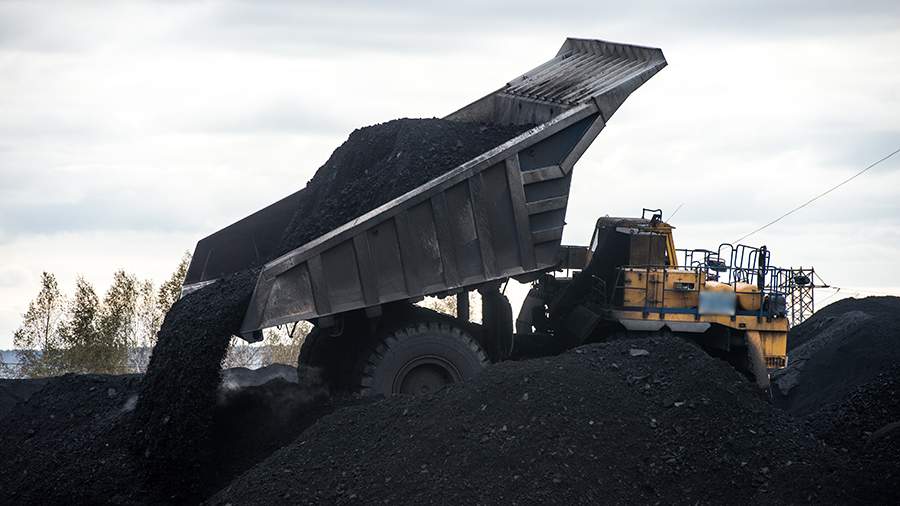
Russian President Vladimir Putin has agreed on an anti-crisis program for the coal industry, formed by the government. Izvestia reviewed the document on May 13.
The document clarifies that the support measures were developed on behalf of Deputy Prime Minister Alexander Novak by relevant departments at the end of 2024 and agreed with Prime Minister Mikhail Mishustin.
The coal industry ended last year with a consolidated loss of 112.6 billion rubles, in January 2025 it amounted to 7 billion rubles.
In a letter to the president, Novak noted that the pressure on the industry's performance is exerted by falling global prices for solid fuels, sanctions, expensive logistics, "limited opportunities" for export through the Eastern landfill, the strengthening of the ruble and a number of other negative factors.
Despite the conclusion of an agreement between Russian Railways and Kuzbass for the transportation of coal for export to the east in the amount of 54.1 million tons in 2025, an increase in the planned volume of transportation by 25.1 million tons in the eastern and 12 million tons in the western directions, a decrease in freight car rates and the cost of transshipment at ports, in particular, in the south by 1.5-2 times, — the financial condition of the industry "continues to deteriorate."
In the first paragraph of Novak's proposals, it is noted that "in order to avoid negative social and man-made consequences of the bankruptcy of coal enterprises, the authorities intend to create a "special tool" for the restructuring, rehabilitation and rehabilitation of the coal industry on the basis of VEB.RF.
Among other measures to improve the efficiency of the industry are the establishment of a special procedure for the financial recovery or bankruptcy of coal industry organizations, deferral of taxes and insurance premiums under a simplified procedure without collateral for a year with the possibility of prolongation while maintaining the crisis situation, the conclusion of an agreement between Russian Railways and Khakassia for the guaranteed export of solid fuels to the east, the provision of discounts to enterprises. for rail transportation in the southern and western directions in the amount of 12.8% from May 1 to December 31, 2025.
Commenting on the anti-crisis measures, Chairman of the Supreme Council of Khakassia Sergey Sokol told Izvestia that so far there is no understanding of an improvement in the situation for coal miners in 2025.
"The key challenges for Russian coal exports today are the shortage of railway infrastructure capacity and a significant increase in sea transportation costs due to the reorientation of flows from Europe to the Asia-Pacific region. The issue of regulating the conditions of transportation by rail, which has received the approval of the President of Russia, is the number one priority," Sokol believes.
According to Dmitry Prokofiev, a member of the Board of the Foundation for Assistance to Regional Initiatives, the crisis in the coal industry is a derivative of the situation that has developed at the global level.
"The reconfiguration of the global energy system, which leaves less and less space for coal. We can say that coal fulfilled its historical role as a driver of the first industrial modernization based on steam engines," added Prokofiev.
Dmitry Tortev, a member of the Expert Council of the State Duma Committee on Energy, also agreed with him.
In his opinion, "the support for the coal industry initiated by the president is an important step, but it should not become the final point."
"Yes, maintaining quotas, Russian Railways discounts and export guarantees to the east will help businesses survive the sanctions. However, the key question is where we are going: do we continue to feed the export—oriented raw material model, or are we starting to build a high-value-added economy?" said Tortev.
According to him, 90% of coal from Khakassia goes to Asia, and the domestic market "remains on starvation rations." At the same time, deep processing of coal in the region into carbon chemical products or synthetic fuels could generate 3-4 times more profit than the export of raw materials.
"But this will require not transportation benefits, but federal programs to create innovation clusters, tax preferences for processing industries, and synchronization with national projects in the energy and industry," the expert concluded.

Earlier, on April 24, Novak instructed the federal center and the regional authorities of the Russian Federation to work out medium-term measures to support coal enterprises. The instruction was given following a meeting of the subcommittee on improving the sustainability of the financial sector and individual sectors of the economy, which discussed the current situation of the coal industry and measures to improve its efficiency. The heads of the coal mining regions of the Russian Federation reported to the government on the situation in the industry. The proposed measures of the Ministry of Energy should be finalized, taking into account the announced additions.
Переведено сервисом «Яндекс Переводчик»
