
Tight pauses: how markets reacted to the 90-day tariff suspension
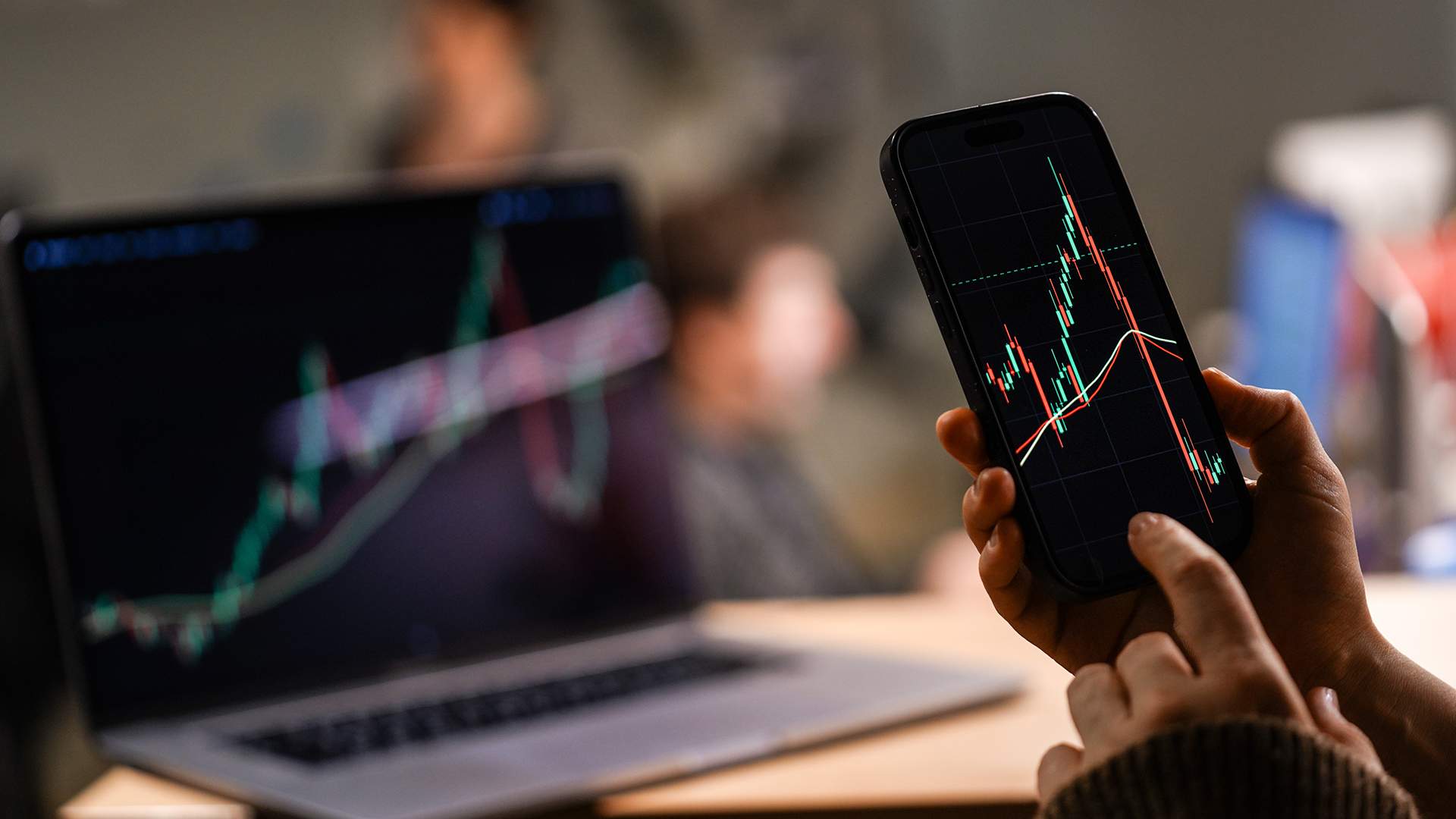
In the next three months, the markets will remain volatile and will play back every news related to the negotiations on the tariff war. American and European stock indexes jumped up to 12%, reacting to the news about the suspension of increased duties for 90 days. Despite the fact that fees against China have already been raised to 145%, Chinese indices, like the yuan, are still strengthening. Trump uses his favorite tactics: first, in every sense of the expression, he raises the stakes, and then presents even small successes as his victory, political analysts noted. Therefore, investors expect that the riskiest phase is already over, and negotiations will follow. However, even fees of 10% will have a significant impact on the global economy and inflation, but it will last for several years.
Markets' reaction to Trump's decisions
Markets reacted positively to Trump's decision to postpone the imposition of increased duties for 90 days for those countries that have not yet established retaliatory measures. The decision was announced on the evening of April 9. The S&P 500 closed this trading session with an increase of 9%, while Dow Jones — by 8%, Nasdaq — by 12%.
On April 10, Japan's Nikkei rose 9%, recouping half of the last month's decline. Germany's DAX, Britain's FTSE and France's CAC increased by 4% as the European Union also postponed countermeasures for three months.
Even the Chinese market is trading in the black, despite the fact that Trump raised tariffs for China to 125% on the eve, and Beijing is tough on further measures. The Shanghai Composite index rose by 1% on April 10, recovering a third of the drop in recent days, while Hong Kong's Hang Seng rose by 2%.
At the same time, the yuan exchange rate, which weakened by 1% to 7 yuan per dollar the day before, the lowest since September 2024, also strengthened by 0.4% on April 10. All this suggests that the Chinese economy feels stable against the background of mutual tariffs. However, it is worth noting that on April 10, Trump turned 125% for China into 145%.
The Russian market is also responding positively to the general trade truce. On April 10, the Moscow Exchange index jumped by 5%, reaching 2,800 points again.
For the second time in the last week, markets have been trying to grow on any hints that Trump is ready to turn aside, recalled Kirill Seleznev, an expert on the Garda Capital stock market. On the one hand, everyone understands that he is playing hardball and is unlikely to sever trade relations with the rest of the world. On the other hand, it is unclear at what point he will decide that it is enough to scare and it is necessary to go to some kind of agreement that will look like his personal victory over China and all those who "profited" from America.
— Stock markets will continue to play out the news swing. All that can be said so far is that investors clearly expect Trump not to flirt too much. They buy stocks at the slightest hint of positivity or even rumors of positivity. Therefore, as soon as the attention of the US president turns to another problem, for example, with Iran, everyone will happily forget about China, duties, and indices will slowly begin to recover, Kirill Seleznev expects.
The split over tariffs within the United States
The total wealth of the world's richest people increased by $304 billion on April 9 due to such jumps on the stock exchange, which is the largest one—day increase in history, Bloomberg estimates. The billionaire rating is still led by Tesla owner Elon Musk, who became richer by $36 billion on Wednesday alone, as shares of the electric car manufacturer jumped by 23%. His fortune is now estimated at $326 billion.
In April, Musk repeatedly publicly spoke out against the duties. His criticism fell not so much on President Trump as on White House trade adviser Peter Navarro, who is called the main initiator of protectionism in the US administration. In particular, it is believed that the formula for calculating additional fees, which economists call questionable and questionable, was also invented by Peter Navarro.
"The Ph.D. degree in Economics received by (Navarro. At Harvard, it's bad, not good. The result is an ego/brain problem," Elon Musk wrote on social media.
Navarro has consistently advocated import duties for many years, particularly for China. He has scientific papers on this topic. However, back in 2019, the American media conducted an investigation and found out that in his writings the scientist refers to a certain Ron Var, who does not actually exist — this is an anagram of the author's last name. Then even Navarre himself confirmed the forgery.
What signals does Trump's truce give to the market?
Trump's unexpected statement about the 90-day pause was perceived with great relief as a manifestation of "common sense" and willingness to take a step back to prevent the onset of the crisis, said Olga Belenkaya, head of the macroeconomic analysis department at Finam. The rally in the markets could have been reinforced by technical factors, such as the closing of short positions.
— But it is not surprising that the euphoria turned out to be short—lived, because the economic uncertainty has not disappeared anywhere, the already introduced and possible future tariffs will still negatively affect the global economy. In addition, the postponement is not equivalent to the cancellation: the 10% base tariff and other previously introduced fees will be in effect, and Trump also announced an imminent increase in tariffs on pharmaceutical products," Olga Belenkaya emphasized.
Even if the United States stops at the current level of duties, this will increase the country's basic import tariff by at least a quarter compared to Trump's first term, Olga Belenkaya estimated. Then it will be a shock to the global economy, which will be spread over several years. It will slow down global GDP and raise inflation in all countries involved in the conflict.
As for China, investors expect that the republic will be able to transport its goods through other countries with more favorable conditions — "tariff arbitration" simply forces us to work out such options, the expert added. The prevalence of this phenomenon will depend on how the United States reacts to such schemes to circumvent increased tariffs.
— The issue of economic growth and inflation in China remains open. There may be a redirection of export flows, including an increase in sales of Chinese goods within the country and their replacement by "foreign ones," warned Oksana Kholodenko, head of the analytics and promotion department at BCS World Investments.
For the Russian economy, the consequences of the trade war, one way or another, still look negative, she concluded. In the worst-case scenario, Russia will reduce oil supplies to China, which will negatively affect the largest companies, the stock market, and the budget.
How will the negotiations on duties end?
Trump's strategy in negotiations is not new — it is enough to recall his last presidential term, said Igor Kovalev, First Deputy Dean of the Faculty of World Economy and World Politics at the National Research University Higher School of Economics. The tactic was the same: raise the bids, then step back and cut the coupons where it was possible. So, in the case of North Korea, there is a sharp escalation of the situation, followed by a visit to Asian countries — Japan, South Korea — and the signing of arms supply contracts.
— The situation is very similar here. It all starts with scary threats. Although it is clear that any tariff above 40% is actually prohibitive, and it can lead to the destruction of trade and an economic crisis. I think Trump understands that the United States does not need an economic crisis. Hence the step back — the 90-day pause and the talk that we will gradually come to an agreement and sign beneficial agreements," the expert drew parallels.
At the same time, China is comparable to the United States in terms of economic power, Kovalev noted. In addition, China is the largest exporter of goods to the United States, and the Chinese are well aware that America cannot do without their goods.
— For example, almost all clothes and shoes, many household items are made in China. And, of course, the United States cannot afford to abruptly cut ties with China. So it's going to be difficult for Trump with this country. In his last term as president, he didn't really manage to win the trade war with China. And this time, Trump is also unlikely to be able to achieve high—profile results," Igor Kovalev expects.
However, according to his forecasts, countries with low sovereignty — including almost all EU states — are likely to bend under this onslaught.
Переведено сервисом «Яндекс Переводчик»
