
Getting Food: BRICS prepares to establish an agricultural alliance
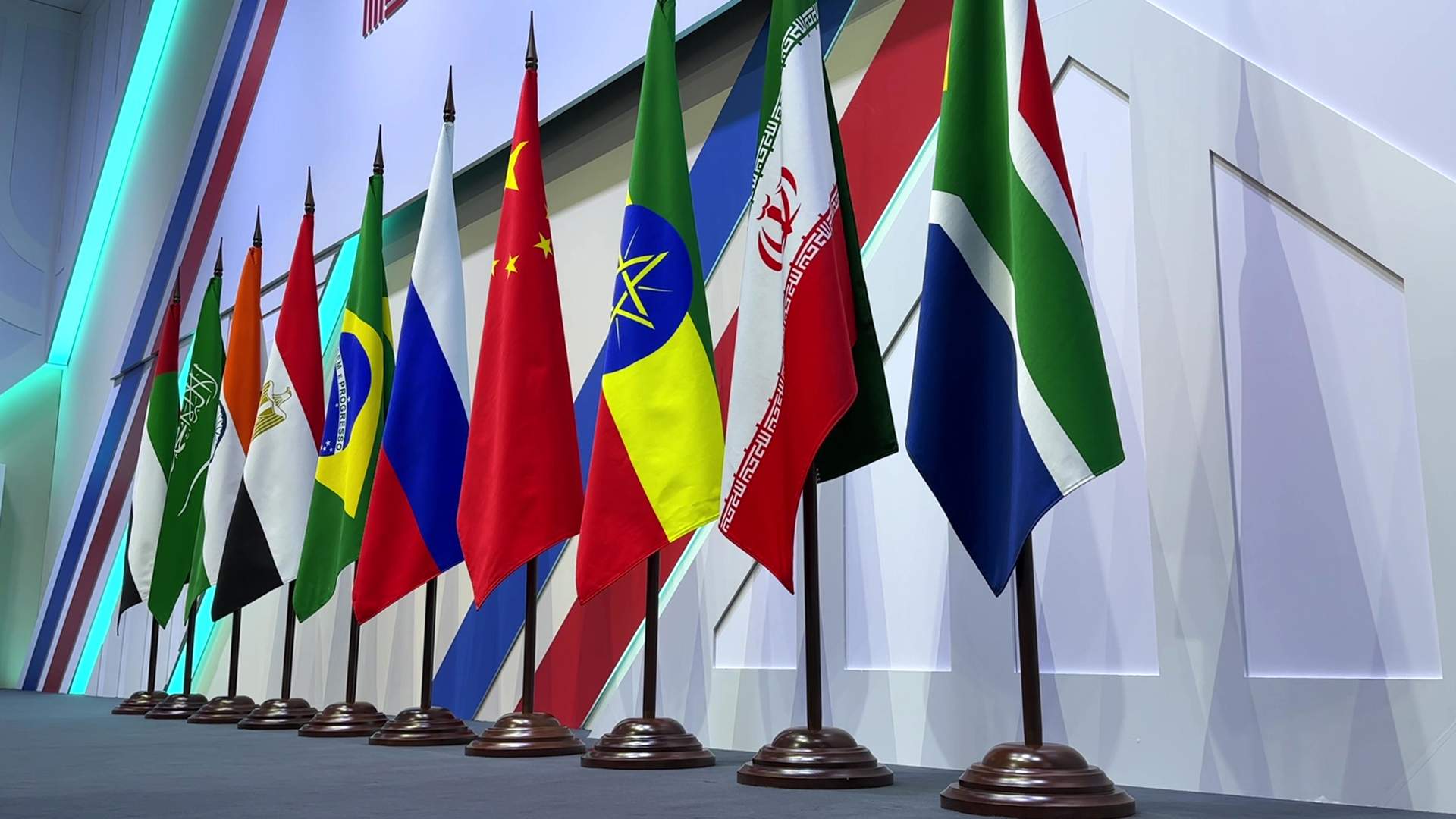
In June, a congress will be held at which the BRICS Agrarian Alliance is planned to be established on the Russian initiative. This was announced to Izvestia by Lyudmila Orlova, President of the National Movement of Conservation Agriculture. The official proposal to join as a co-organizer has already been sent to Brazil - the chairman of the association in 2025. The EAEU countries and observers, such as Kazakhstan and Uzbekistan, have also shown interest in the new alliance. What are the goals of the future alliance and what is its uniqueness - in the material of "Izvestia".
What is the BRICS Agrarian Alliance?
In June, the BRICS Congress will be held, where it is planned to approve the creation of the Agrarian Alliance of the association. This "Izvestia" said the President of the National Movement of Conservation Agriculture Ludmila Orlova.
- We have already held a round table in December and now we have agreed to hold a congress and create such an alliance. More than 10 countries have responded. Now we are finalizing documents, mechanisms, and forming the program. We see Brazil as a co-organizer, as it chairs the alliance. Now we are waiting for a response. All the documents have been approved and agreed upon," Lyudmila Orlova told Izvestia.

The new alliance is designed to unite the efforts of states in the sphere of agriculture and environmental technologies, offering an alternative to Western models of cooperation. Orlova noted that various programs are being worked out, which will have their own separate leader and not only from the Russian side. It can be assumed that the BRICS Agrarian Alliance will function on the basis of rotating presidency.
One of the tasks of the alliance could be the development of programs to reduce the carbon footprint in the agro-industry. This usually involves the introduction of precision farming technologies, renewable energy sources and emission monitoring systems. Carbon credits, a mechanism whereby countries or companies receive financial compensation for reducing CO₂ emissions, have recently received special attention. In theory, BRICS could create its own platform for trading such credits, competing with Western counterparts such as the European Emissions Trading System (EU ETS).
It is worth noting that not only BRICS members or partners are welcome in the alliance. Member and observer countries of the Eurasian Economic Union (EAEU), including Kazakhstan and Uzbekistan, have already shown interest in the project, said Lyudmila Orlova. These countries, which have significant agricultural resources, can multiply the potential of the future alliance.
- Due to the difficult current situation, we have not yet approached the Western countries on this issue. But on the whole, they are quite calmly communicating with us. Last year they even spoke at our conference. We cooperate with the USA, Canada and European countries in the sphere of information exchange on scientific topics and agrarian issues. The coldness in relations is going away," Lyudmila Orlova emphasized.

Last June, more than 200 Russian and 100 foreign delegates, including business leaders and major specialized organizations from Egypt, Brazil, India and China, participated in the BRICS conference on agribusiness. Also in the summer of 2024, initiatives to create a unified agrarian grain exchange for the BRICS member countries were discussed. Earlier, on April 20, Russian President Vladimir Putin instructed the government together with the Central Bank to submit relevant proposals. Experts believe that the creation of such an exchange will take several years.
- We remember that earlier, both BRICS and G20 created platforms for information exchange in the field of agricultural cooperation. Each BRICS country was responsible for one or another area. And it was much better organized in this very association," Victoria Panova, Head of the BRICS Expert Council, told Izvestia.
What are the tasks of the alliance
The establishment of the BRICS Agrarian Alliance in 2025 is due not only to economic but also strategic reasons. Against the backdrop of growing competition between global centers of power, the countries of the alliance seek to strengthen food security and reduce dependence on Western institutions. An important factor is the severe sanctions pressure of Washington and Brussels on Russia, which boomerangs on them and on global food supply chains in general. Developing countries in Africa and Asia are suffering the most damage.

- This is happening against the backdrop of a worsening food crisis in the world, as well as weak regulation of agricultural trade for major supplier countries. The agricultural alliance will allow organizing controlled trades, concluding favorable trade contracts and forming settlement rules in national currencies to control prices in the global agricultural market. The fact that this idea is being promoted by the leaders of the developing world can be seen as an attempt to influence global regulation in the industry without the participation of Western countries," Denis Kuznetsov, associate professor of the Department of World Political Processes at the Moscow State Institute of International Relations, told Izvestia.
Western countries, realizing the potential of BRICS, may start promoting their own initiatives. In particular, there is information that analogs of the BRICS Agrarian Alliance may be developed by Germany, which may also involve the countries of the Global South in cooperation in agriculture, ecology and sustainable development. If BRICS fails to consolidate in time, the West could seize the initiative by offering developing states financial and technological advantages in exchange for political concessions.

Another factor of urgency is the growing risks of economic pressure from the US. American President Donald Trump has declared his readiness to impose 100% duties on BRICS countries' goods in case they abandon the dollar. The threat came in connection with the association's plans to develop alternative payment mechanisms, including settlements in national and digital currencies. The agricultural alliance, integrated into the BRICS financial system, can become a tool of defense against such sanctions, ensuring the stability of food supplies outside the dollar zone.
BRICS covers about 42% of the world's population and over 30% of the land area, making it an ideal platform for agrarian cooperation. The association has a unique combination of resources: Russian and Kazakh black soils, Brazilian tropical land, Indian labor and Chinese technology. In addition, the participation of partner countries will expand the geography of the alliance and strengthen its influence on world markets. For Russia, this project is evidence that it is a driver of BRICS, a generator of projects and ideas for the development of the alliance, says Denis Kuznetsov.
Переведено сервисом «Яндекс Переводчик»
