NAIS discussed drone development challenges for 2025

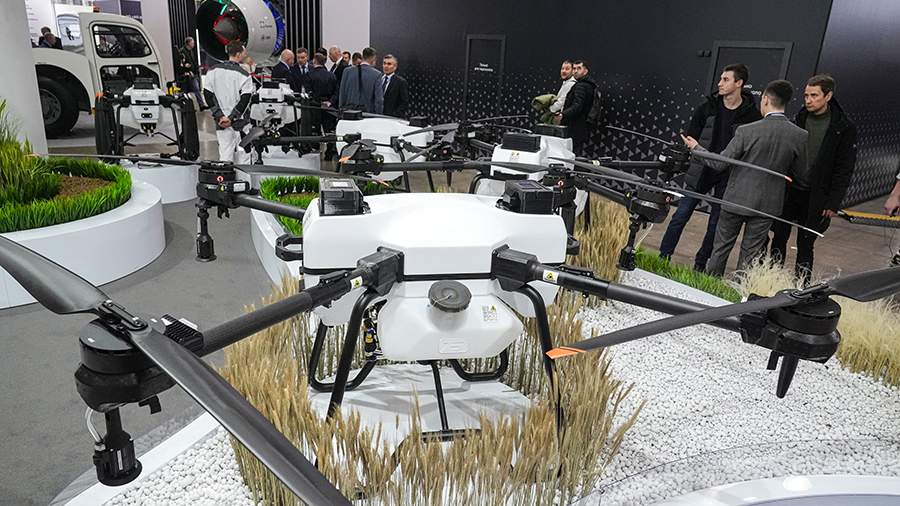
At the national exhibition of civil aviation infrastructure NAIS-2025 on Thursday, February 6, held a session devoted to the key tasks and priorities in the industry of unmanned aircraft systems in 2025.
"About how the formation and development of this industry in 2025 sees itself, <...> on the example of the Samara region and on the example of a specific enterprise: it is to launch in the spring season <...> about 400 drones for agricultural aviation tasks," - said the deputy head of Rosaviatsia Andrey Potemkin.
He specified that it is planned to launch this number of aircrafts at the beginning of the season, and in the fall the number of drones for agricultural work will increase to 1 thousand.
In addition, the region has already reached agreements with Samara logistics for delivery of goods from darkstores and sorting points to postamats. It is planned to install several hundred such devices in the agglomeration of Samara and Togliatti. Potemkin expressed hope that these plans will be realized, and noted that Rosaviatsia is ready to actively work on it. The deputy head of the agency pointed out that Samara has a special experimental-legal regime under which drones, which are shown on the stand at the exhibition, are allowed to be used in aerology. In 2025, the task is to extend the practice of the Samara region to other regions.
Gleb Babintsev, General Director of the AERONEXT Association, said that a separate federal project called "Stimulating demand for unmanned aircraft systems" has been launched. The increase in demand here is achieved through the formation of a state-civil order for drones. This initiative will lead to an increase in the activity of drone developers.
Semyon Semyonov, First Deputy Flight Director of JSC Polar Airlines, noted that in 2025, the Rescue Service offered developers to test their drones in fire and flood conditions. Before the drones are put into permanent operation, it is necessary to prepare the infrastructure for this: it is necessary to have automatic weather stations in the places of takeoff and landing, without this it is impossible to provide drone flights.
Semenov pointed out that training courses for drone operators have now been prepared with a duration of 2 years and 10 months, with training beginning in September 2025. In addition, there is an additional pilot training program for 256 training hours.

The day before, on February 5, Alexander Nefediev, vice president, financial director of the Avangard Design and Installation Center (ADC), told the NAIS exhibition about a special radar that can detect aircraft-type drones at a distance of up to 20 km, and at a distance of about 6 km can provide information about the threat from quadrocopter-type drones.
The exhibition takes place on February 5 and 6 at Crocus Expo. During the event, specialists and managers get acquainted with innovations in the aviation industry from all over Russia. The exhibition presents samples of machinery, equipment and technologies of more than 140 companies from 20 regions of Russia, Belarus, China and Iran.
Переведено сервисом «Яндекс Переводчик»
