He wants to fly: how St. Exupery became a pilot and author of Izvestia

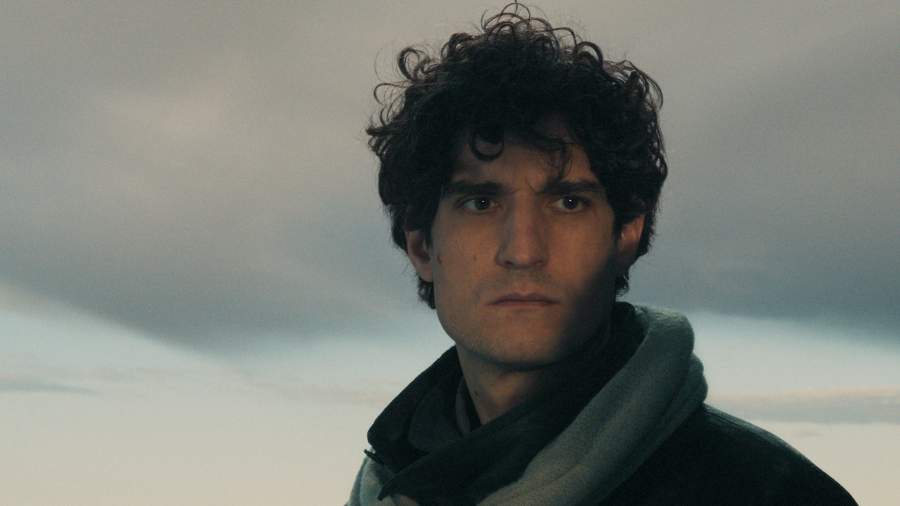
How did the author of "The Little Prince" save his friend who had an accident in the mountains, and why couldn't the great story have appeared without his adventures? About this tells a new biopic "Saint-Exupéry", the main roles in which performed Louis Garrel, Vincent Cassel and Diane Kruger. For the release of the movie in the Russian hire "Izvestia" recalls the aviation adventures of the writer, including in the USSR, one of the results of which was its publication in our newspaper.
Flights on the screen and in real life
For the general public, St. Exupery is the author of the philosophical parable-novella "The Little Prince", one of the best-selling and most frequently translated books in the world. It is much less known that Exupery was not only a writer, but also a pilot. And in his case, his literary work grew directly out of the experience gained through his first profession. In the movie by Pablo Aguero, this is clearly shown.
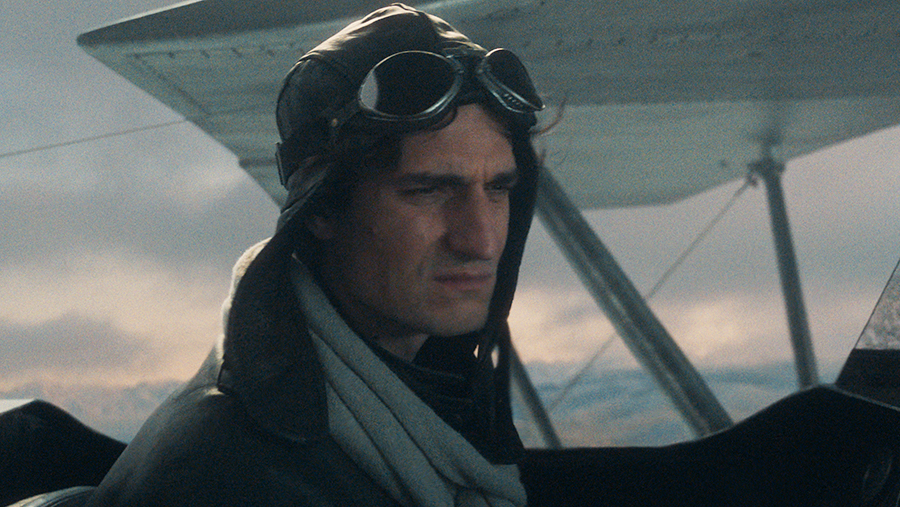
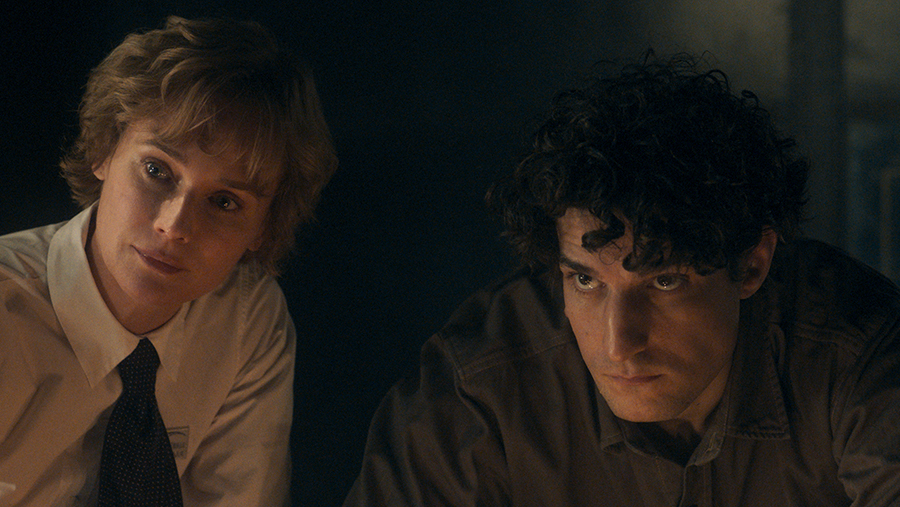
The plot is based on a real story about the rescue of pilot Henri Guillaume, who crashed and was miraculously saved. Guillaume (played by Vincent Cassel) together with Exupéry (Louis Garrel) worked in a company that delivered mail by airplane. One day Henri bailed out a comrade who had an accident and was forced to land on water. But the loss of the aircraft hit the company hard, and already experiencing a crisis due to competition with railroad transportation. So the friends developed a new, more risky flight route - through the mountains. It was the only way to increase efficiency. Once on the road, Henri soon stopped responding to dispatchers. Then Exupery flew after him.
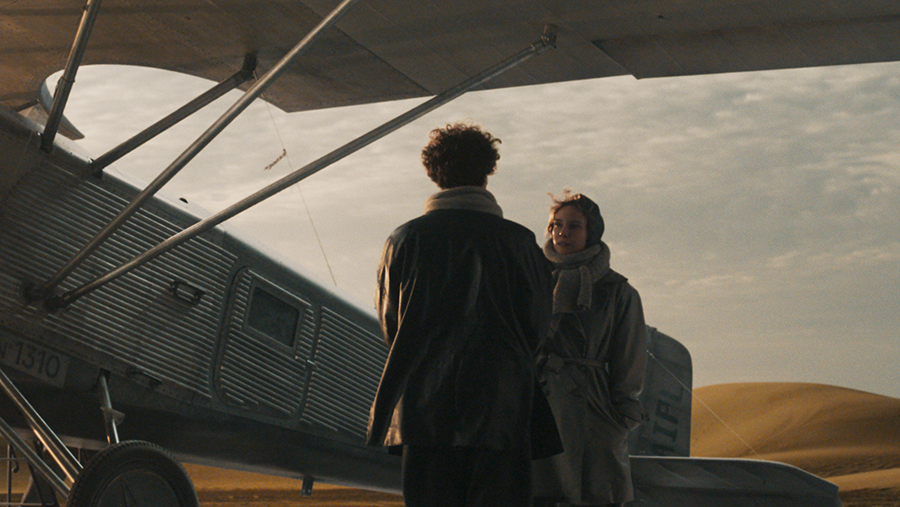
The movie has charming characters, beautiful historical scenery and, of course, a lot of spectacular shots in the sky. But most importantly, the creators sought to show from what impressions the "Little Prince" was born. One of the key episodes is connected with the girl who helps Exupery and lets him remove the strings from his favorite piano to fix the plane. The writer promises for this to take the child on a trip around the world, and meanwhile - draws her in his notebook and says: now you are always with me. And in general, the story of loyalty to friendship and naive faith in the best despite everything is consonant with "The Little Prince". Therefore, the content of the story is worth refreshing before watching.
Forward to the USSR
It is even more interesting to watch the biopic if you remember about another story from Exupery's life, connected both with his flying biography and - unexpectedly - with our country. Five years after the events shown in the movie, in 1935, the writer visited the USSR, and as a journalist. On the assignment of the newspaper "Paris-Soir" he had to write several essays on the life of the Soviet country. At that time, relations between Paris and Moscow were booming, and French readers, of course, wanted to know how everything is arranged in these mysterious Russians.
In the USSR, Exupery spent 19 extremely busy days, which researchers have documented in great detail. The Frenchman met Mikhail Bulgakov, an elderly compatriot living in a communal apartment, a governess and a judge who passed death sentences (the report in which Exupery discusses Soviet laws turns out to be one of the most unconventional views on this by no means black-and-white subject). He escaped from hotel guards to attend the May Day celebrations, where he was not officially accredited. He took part in a chess tournament, visited train stations and stores, walked the streets and tried to understand the reason for Stalin's cult of personality.
But perhaps the most colorful adventure of Exupery in the USSR was the flight on the giant ANT-20 "Maxim Gorky", at that time considered the main achievement of Soviet aircraft construction. According to some sources, the miracle of technology to the writer was demonstrated by Mikhail Gromov, a famous test pilot, who on May 1, 1935 at the helm of ANT-20 headed the air parade in Red Square (the same one that Exupery watched in the crowd of demonstrators). However, it is possible that the writer had a different guide: a few days after the parade Gromov went to the hospital with an open ulcer and would hardly interrupt treatment for the sake of not the most famous guest.
But another thing is important: Exupery was not only allowed inside the experimental airplane, but also allowed to sit in the pilot's seat: probably, the Frenchman's flying experience seemed convincing enough to the Soviet specialists. Antoine was delighted. "These corridors, this cabin, these cockpits, this powerful hum of eight engines, this internal telephone connection - everything was unlike the air environment I was used to."
"I lost friends, too."
And the next day tragedy struck. On May 18, "Maxim Gorky" during a demonstration flight was rammed by the accompanying fighter jet, which was making a dead loop near the giant, despite a strict ban. The giant collapsed in mid-air and exploded. The wreckage fell on the Sokol dacha village near Moscow. 49 people died: in addition to crew members and designers inside the ANT-20 were members of their families.
This event was entirely devoted to the third page of Izvestia from May 20, 1935. And among the photos of the victims of the disaster, official condolences from Soviet leaders and representatives of other countries, just under the mourning note of the newspaper's chief editor Nikolai Bukharin we see a column "On the driving force", signed "Antoine De-Seine Exupéry, pilot and writer, special correspondent of "Paris-Soir". He begins his text just by describing his impressions of his own flight on the Maxim Gorky. But, enumerating its constructive merits, Exupery emphasizes:
"Even more than the technical perfection of the airplane, I admired the young crew and the impulse that was common to all these people. I admired their seriousness and the inner joy with which they worked. The feelings that animated these men seemed to me a more powerful driving force than the power of the giant's eight magnificent engines."
Even in this tiny text (three paragraphs) sounds so important for Exupery theme of friendship, brotherhood. "I, too, lost friends whom I had just recognized, but who already seemed infinitely close to me. Alas, they will never again laugh in the wind's face, these young and strong people..." Nevertheless, Exupery concludes his note on a positive note: this tragedy should not make people doubt their own strength, the writer declares. And the people who created "Maxim Gorky" will be able to build "even more marvelous ships".
Back to the sky
We do not know the exact circumstances of the appearance of this publication. Perhaps one of Izvestia's staff members called Exupery at his hotel and simply stenographed his condolences. However, under a much more extensive text by Lev Kassil on the same page it says: "by phone". Exupery has no such note. So we cannot exclude the writer's purposeful work on the column - on his own initiative or, more likely, at the request of one of the organizers of the visit. Indeed, who but Exupery, who had just flown the ANT-20, to speak out about the tragedy in the Soviet press?
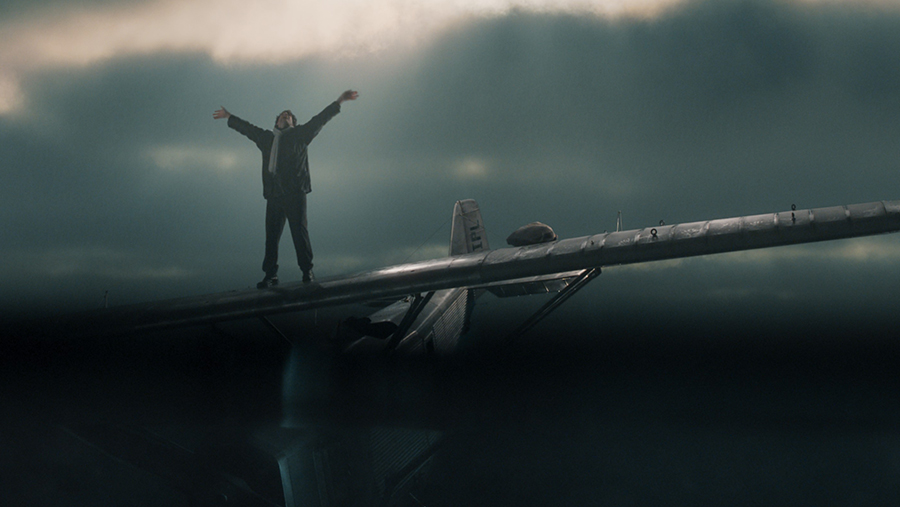
Since that very journey, shown in the new film, Exupery has repeatedly found himself facing death. Being from childhood in love with flying romantic, enthusiastic conquest of the sky, he has always seen the other side of this aspiration. In the same 1935, six months after his return from the Soviet Union, Exupery crashed in the Libyan desert - and almost parted with his life. In 1939, just after the outbreak of World War II, seeks enrollment in a combat unit and becomes a military pilot. In his last flight he goes in 1944 - and from it has not returned.
But released a year earlier, "The Little Prince" immortalizes the name of Exupery. And so, his flight continues: in the texts (and this is not only the story, but also other works, and even journalistic notes, including those written in the USSR), in the films (the new biopic, of course, not the first and not the last) and in the hearts of all who once read the tale of a fox, a rose and a little traveler from a distant asteroid.
Переведено сервисом «Яндекс Переводчик»
