Can Trump end the conflict in Ukraine in 100 days. Dissection

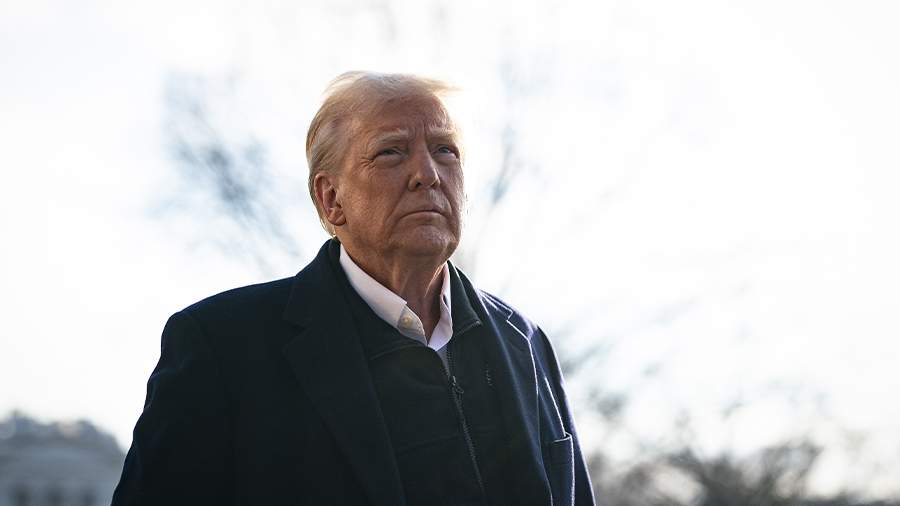
US President Donald Trump has given his special envoy Keith Kellogg 100 days to end the conflict in Ukraine. He gave Russia an ultimatum, threatening to impose tariffs on imports and new sanctions. Earlier, the head of the White House promised to end hostilities within one day, but recognized the impossibility of achieving this. Whether Trump will be able to end the Ukrainian crisis in the timeframe he himself outlined - in the material "Izvestia".
What Trump demands
- Trump has set an ambitious task for his special envoy for Ukraine Keith Kellogg - to end the conflict by the end of the first 100 days of his presidency. This message of the American press quickly spread through the world media and was not refuted, but it was not confirmed. Traditionally, this term - 100 days - is used in American politics to summarize the first results of the reign of the next head of the White House. This symbolic period will end on April 30.
- Kellogg himself before Trump took office said that he would like to achieve the end of the conflict in Ukraine within 100 days. According to him, the White House has the task of first organizing talks between Trump and Russian President Vladimir Putin and Ukrainian leader Vladimir Zelensky (credentials expired on May 20), which will make it possible to find a solution as soon as possible.

- Previously, there was a promise from Trump's side to end the conflict in 24 hours after he became US president. But new Secretary of State Marco Rubio, upon taking office, said the issue was too complicated and would not be resolved through public negotiations. Instead, the Trump administration has focused on organizing a face-to-face meeting between Trump and Putin in the coming months.
What Trump himself has undertaken
- So far, Trump has not taken any concrete action to resolve the Ukraine crisis or announced a peace plan that he envisions following. However, on January 22, he left a message on his social media accounts in which he threatened economic measures against Russia if the fighting did not stop.
- Trump said he would impose "high taxes, tariffs and sanctions" on anything Russia sells to the United States and other countries. He called for "making a deal" and said he was "doing a big favor" to avoid bad consequences, without elaborating. In parallel, Trump said at the World Economic Forum that he wants to meet with Putin as soon as possible to make a deal.
In late January, Ukrainian media published the content of Trump's alleged "plan schedule", which, according to the publication, is being actively discussed by the Ukrainian elite. According to this "plan," as a result of two bilateral or trilateral meetings between Trump and Russian President Vladimir Putin and Ukrainian leader Vladimir Zelensky, a ceasefire along the entire front line will be declared by April 20 - the day when all Christian denominations celebrate Easter.
Why Trump's demands are unrealistic
- The fact that Trump is tying conflict resolution to a symbolic 100 days suggests that this is his next PR stunt, along with statements about Greenland, Panama and Canada. His earlier promise to resolve the crisis in 24 hours also fits into this framework. In this regard, Trump's threats lose their weight, turning into bluffs without any real consequences.
- The events of the last three years have shown that the sanctions policy does not work in principle and the West cannot impose comprehensive restrictions on Russia that would fully meet its intentions. Not only has such a mechanism not yet been developed, but Western countries themselves cannot refuse to supply Russian energy resources. Russia is managing to overcome the effects of the current sanctions, as evidenced at least by the growth in oil and gas revenues recorded in 2024.
- Even if we imagine that Trump would stop all Russian imports to the US, the economic effect would be minimal. Russia shipped $2.9 billion worth of goods in 2024, nearly 10 times less than it did in 2021. The drop in U.S. exports did not cause an economic collapse and was offset by other sources. To try to end the conflict in Ukraine, Trump has chosen a tool that is outdated and irrelevant.
- At the same time, any sanctions, even unworkable and irrelevant ones, have a negative impact on bilateral relations, which will have to be mended sooner or later. If Trump wants to build a dialog with Russia, as he has said publicly, the threat of sanctions will not help in any way. It is, after all, contrary to the norms of international diplomacy that must be observed in order to begin negotiations on the fate of Ukraine.
What are Trump's prospects on Ukraine
- Trump's weakness is that he cannot even fulfill the demands of Ukraine, which is seeking security guarantees for the future. Kiev has already signed several treaties on the subject with European countries, but for the most part they contain commitments to supply military equipment, which does not change the picture on the battlefield. Trump, however, refuses in the current circumstances to let Ukraine join NATO, send his troops to its territory and even tends to reduce military and financial aid, as he promised in his campaign speeches.

- According to Trump and his entourage, Washington's involvement in Ukrainian affairs should be minimal, and Europe should be in charge of Kiev's defense. So if the United States does not provide Ukraine with a strong negotiating position, they themselves have no reason to dictate terms to Russia. Talking about sanctions will not change the military initiative of the Russian Armed Forces. Trump will not be able to stop the Russian offensive and force Moscow to abandon its goals.
- To make a deal and end the conflict, Trump should also take into account the Russian demands that Putin laid out in 2024. These include Ukraine's non-aligned status and the withdrawal of Ukrainian troops from the territory of the Donetsk and Luhansk People's Republics, Kherson and Zaporizhzhya regions. The fulfillment of these conditions will open the way for Russia and Ukraine to start negotiations.
- At the same time, Putin's statement in late January that there might not have been a conflict if Trump had become president in 2020 shows that he has been given some credit: Russia is demonstrating openness to negotiations, particularly with the incumbent American leader, and reminding him that the ball is on his side.
Vladimir Putin
I cannot but agree with him [Trump] that if he had been president, if they had not stolen the victory from him in 2020, then maybe there would not have been the crisis in Ukraine that emerged in 2022.
- Experts say that Trump's futile and contradictory actions so far have laid to rest doubts that he even wants to end the conflict in Ukraine. Like his predecessor Joe Biden, Trump is not interested in resolving the underlying contradictions that led to the crisis, as this allows the US to contain Russia and prevent the building of a multipolar world. In order to conduct real negotiations, really aimed at resolving the conflict, Washington should abandon its previous confrontational foreign policy.
In preparing the material, Izvestia communicated with and took into account the opinions of:
- Viktor Mizin, a research fellow at the Center for International Security of the IMEMO RAN;
- Ilya Kravchenko, an American political scientist and advisor to the director of RISI;
- political scientist Dmitry Drobnitsky.
Переведено сервисом «Яндекс Переводчик»
