- Статьи
- Society
- August 28 — Assumption of the Blessed Virgin Mary: what absolutely cannot be done, omens

August 28 — Assumption of the Blessed Virgin Mary: what absolutely cannot be done, omens
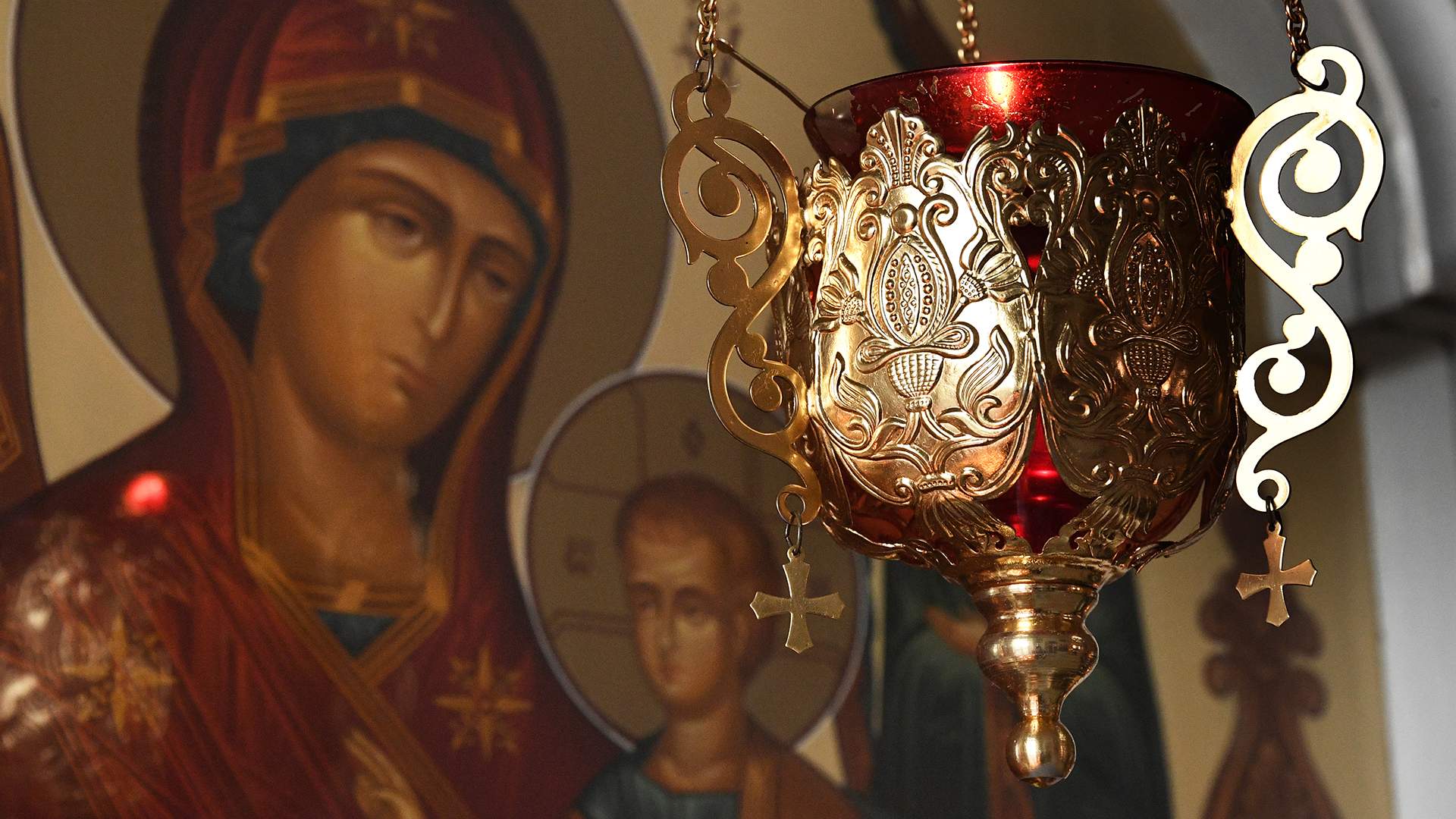
The Day of the Assumption of the Blessed Virgin Mary is a great Christian holiday dedicated to the passing into eternal life of the mother of Jesus Christ, the Virgin Mary. The celebration is one of the 12 main, or twelve-day, Orthodox holidays celebrated annually by believers. In 2025, the Dormition of the Blessed Virgin Mary will traditionally be celebrated on August 28. This date is followed not only by the Russian Orthodox Church, but also by some other local churches (Georgian, Jerusalem, Serbian and Polish). At the same time, Catholics celebrated the Assumption according to the Julian calendar on August 15. Izvestia tells us when the Orthodox holiday appeared and how to celebrate it correctly.
Assumption of the Blessed Virgin Mary: What kind of holiday is August 28th?
The Dormition of the Blessed Virgin Mary is an important Christian holiday, which is dedicated to the memory of the death (dormition) of the earthly life of the mother of Jesus Christ. According to historical texts, the holiday became generally recognized at the end of the sixth century. The Byzantine Emperor Maurice issued an order setting the date for the celebration of the Dormition of the Virgin on August 15, timing her victory over the Persians. The religious holiday was revered throughout the ancient Christian world — in Byzantium and in Ancient Russia.
The celebration is called the Dormition, because on this day the Blessed Virgin Mary calmly and peacefully left her earthly life, as if she had fallen asleep. The word "dormition" is translated from Old Slavonic as "peaceful death" or "sleep." Therefore, the death of the Virgin Mary was not a sad, but a bright event, symbolizing her transition from an earthly finite life to an eternal heavenly existence and meeting with her son Jesus.
To date, there is no reliable information in canonical Christian texts about when and under what circumstances the earthly path of the Virgin Mary ended. Also, nothing is known about her burial. So, in the New Testament, one can only read that after the crucifixion of Christ, his closest disciple, the apostle John, did not leave Mary in the mountain, but took her into his care (The Gospel of John, chapter 19, verse 26).
It is important to note that all existing materials for hagiography (literature on the lives of saints) The Virgin Mary, describing the circumstances of her death and ascension to heaven, have an apocryphal origin. This means that such texts are not included in the canon by the Church, so the authenticity of the events described in them is considered unconfirmed.
The apocrypha claims that on the eve of her death, the Virgin Mary was visited by the archangel Gabriel, who informed her that in three days she would "depart to Christ God." Before her death, Mary wanted to see the apostles. She prayed to God, and he granted her last earthly request. At one point, the angels transported the apostles, who had dispersed to preach the Gospel in different countries, to Jerusalem, and, according to the apocrypha, they miraculously appeared in front of Mary's house.
After the peaceful death of the Virgin Mary, the apostles performed the burial of the Virgin in the tomb where her parents Joachim and Anna, as well as her husband Joseph, had previously been laid to rest. The body of the Virgin Mary was carried through Jerusalem in a solemn procession. After the burial, the apostles closed the entrance to the cave with a stone and dispersed.
The Greek "Legend of the Dormition of the Holy Virgin" mentions that after the earthly death, the body of the Virgin also went to heaven, but there are no relics of her anywhere on earth. One of the versions of the Latin apocrypha "The Passage of Mary" contains additional details related to her ascension. It says that the Apostle Thomas did not participate in the burial of the Virgin. He was transferred to Jerusalem from India after the burial of the Mother of God and claimed that the body of the Virgin was not in the tomb. When the apostles opened the tomb so that he could verify the burial of the Mother of God, the body of the Virgin was not there.
Then Thomas told him that he had seen the Virgin ascend to heaven, and asked her to give him her blessing. The Most Holy Theotokos threw off her belt to him, symbolizing divine blessing. According to the Latin apocrypha, the girdle of the Virgin Mary fell on a stone that is now located on the territory of the Russian Gethsemane Monastery of St. Mary Magdalene on Mount of Olives in Israel.
Other sources say that the apostles, at Thomas' request, opened the coffin on the third day. There was no body of Mary in it, there was only her robe. This event is explained by the fact that God moved his mother's body to a place pleasing to him. Mary's clothes, which were found in an empty coffin, were later transferred to the Blachernae Church.
In the Russian Orthodox tradition, this event is interpreted according to the texts of St. Dmitry Rostovsky, the author of the multivolume collection "The Lives of Saints." His description can be found in the work "The Dormition of Our Most Holy Lady, Theotokos and Ever-Virgin Mary."
As for the meaning of the holiday, August 28 does not celebrate the death of the Virgin Mary, but her transition to eternal life and the long-awaited reunion with her son. The icons and frescoes dedicated to this event depict the Mother of God in two guises at once.: her body remains on earth, but her soul ascends to heaven. Dormition is a celebration of victory over death. By His resurrection, Jesus Christ proved that life is possible outside the human world. And the Mother of God became the first and only mortal to rise before the Second Coming and the Last Judgment.
Assumption of the Blessed Virgin Mary: what not to do, folk signs
On the eve of the Dormition of the Virgin and on the day of the feast itself, on August 28, solemn divine services are held in churches. The priests read the Gospel, and the church choir performs hymns of praise and thanksgiving dedicated to God and the Mother of God. Believers bring flowers to the icon of the Mother of God and ask her for health and well-being for themselves and their loved ones. There is also a tradition in Orthodoxy to consecrate bread or small bunches of ears of corn in the temple.
On August 28, 2025, believers should attend a divine service or take time to pray at home. It is also customary on this day to help those in need, as the Mother of God did during her lifetime.
According to the church calendar, the date of the feast falls at the end of the two-week Dormition fast. Also, the church charter prescribes to observe moderation in food and alcohol and not to indulge in too much exuberant fun. In addition, during the holiday it is forbidden to clean the house, do heavy physical work, sew, as well as swear, swear and enter into conflicts.
In Russia, this holiday marked the end of field work. It was believed that the last sheaf in the winter field should be pressed on the Assumption. Put the squeeze on the last sheaf in the winter field.
According to popular beliefs close to superstitions, you should not wear tight shoes on the Assumption, because those who rub their feet on the holiday will not see joy in life for a long time. Walking in the morning dew was also considered a bad omen. The cool drops falling on the grass were perceived as tears of the earth mourning the Virgin, so it was a great sin to trample them.
Immediately after the Assumption, the time of matchmaking began. Young people were choosing brides to get married in the fall. It was believed that at this time, the Virgin Mary herself from heaven blesses couples for a happy family life. It was believed that unmarried girls should not get a haircut during the holiday period, as this postpones the day of the future wedding.
Another Assumption tradition is summer send—offs. It was believed that the sun falls asleep, which makes the nights longer and colder. Therefore, on the festive evening of August 28, a fire was lit in all houses for the first time and dinner was served by light. From that moment, the harvesting of pickles for the winter began.
Many weather signs are also associated with the feast of the Assumption of the Virgin. It was believed that a rainbow in the sky on this day promised a warm and sunny autumn, and rain — bad weather until the end of September. If it is sunny and warm on the holiday, the coming Indian summer will not be hot. The abundance of cobwebs promised a snowless winter, and heavy fog promised a rich harvest of mushrooms.
Переведено сервисом «Яндекс Переводчик»
