July 29 — NASA's Birthday: A History of Major US Space Projects

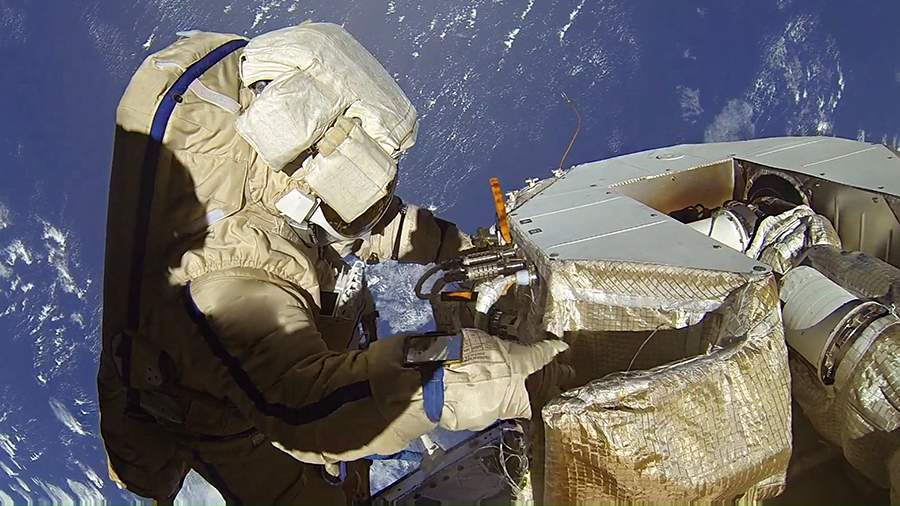
Every year, on July 29, the United States celebrates the founding day of the National Aeronautics and Space Administration (NASA). In 2025, the holiday falls on dnjhybr. Izvestia talks about the most significant NASA space programs and shares interesting facts about the work of the department.
The history of the NASA Birthday Holiday
The history of NASA began on July 29, 1958, when U.S. President Dwight D. Eisenhower signed the Aeronautics and Space Exploration Act, a document that marked the beginning of a new era in American space activities.
Initially, the office was created in order to overcome the "satellite crisis", as the launch of the first artificial satellite of the Earth, carried out by Soviet engineers in October 1957, was called in the United States. This success gave the USSR a significant advantage in the space race and pushed the American leadership to take active action.
Thomas Keith Glennan became the first head of NASA. At the beginning of his work, the resources were very modest — only four laboratories and about 80 employees. But in February 1958, the United States launched its own satellite into orbit, and in January 1959, it announced the recruitment of astronauts for the first manned missions under the Mercury program.
Between 1959 and 1963, eight launches were conducted: two with animals and six with humans. Alan Shepard became the first American astronaut to make a suborbital flight in May 1961, having spent only 15 minutes in space.

The next important program in NASA's history was Gemini, which operated from 1965 to 1966. It allowed for the first-ever docking of spacecraft. At the same time, astronaut Edward White went into outer space for the first time, only two months behind his Soviet colleague Alexei Leonov.
NASA's most ambitious project was the Apollo program, which involved the landing of astronauts on the moon. A super-powerful Saturn rocket was developed specifically for it. The first attempt to reach an Earth satellite turned into a tragedy — the Apollo 1 spacecraft exploded during ground tests. All crew members died, and the launch of the lunar mission was postponed for 21 months.
Nevertheless, in 1969, the Apollo 11 spacecraft successfully left low Earth orbit and reached the Moon. Astronauts Neil Armstrong and Buzz Aldrin became the first people to set foot on the lunar surface. Subsequently, NASA astronauts made five more expeditions to the Earth's satellite.
In 1975, another significant event in the history of space exploration took place — the joint Soyuz–Apollo program of the United States and the USSR, during which the Soyuz-12 and Apollo spacecraft docked. Within 46 hours, the crews of both ships switched sides several times, and returned home safely after separation.
This event was the first international docking in history and was called the "handshake in space." It was of great importance for reducing tensions between the United States and the USSR, and also formed the basis for the creation of the International Space Station (ISS).
Shortly after the completion of the Apollo program, NASA began developing reusable space shuttles to reduce the cost of manufacturing launch vehicles. In total, six ships were built as part of the Space Shuttle program. It was assumed that each of them would be able to make up to 100 space flights, but during the existence of the program from 1981 to 2011, only 135 launches were carried out.
Today, almost 18,000 people work at NASA facilities. In 2024, the organization's budget amounted to $24.8 billion.
NASA's birthday in 2025: interesting facts
In honor of NASA's birthday, Izvestia collected some interesting facts from the history of management.
Since 1968, NASA's main space center has been located on Merritt Island in Florida. However, only 9% of its territory is used as a spaceport, the rest is occupied by a national park. Because of this, the center's staff often encounter wild animals. Most of the problems are caused by alligators who like to bask in the sun near runways, parking lots and other facilities.

A vertical assembly building is located on the territory of the Kennedy Space Center, where spacecraft are being built. At the time of its construction in 1966, it was the largest in the world in terms of internal volume — more than 3.6 million cubic meters of free space.
The combination of the gigantic size and humid climate of Florida led to an unexpected result — clouds began to form inside the building. To solve this problem, NASA specialists had to develop a special ventilation system weighing 10 thousand tons.
In 1995, the launch of the Discovery shuttle was delayed for two months due to the activities of woodpeckers. The birds punched many holes in the thermal insulation of the fuel tank, which made it impossible to launch the ship.
Earlier, Izvestia reported on the history and traditions of Cosmonautics Day in Russia.
Переведено сервисом «Яндекс Переводчик»
