- Статьи
- Local news
- The main transport hub of the Armed Forces of Ukraine: the strategic importance of the capture of Chasova Yara

The main transport hub of the Armed Forces of Ukraine: the strategic importance of the capture of Chasova Yara
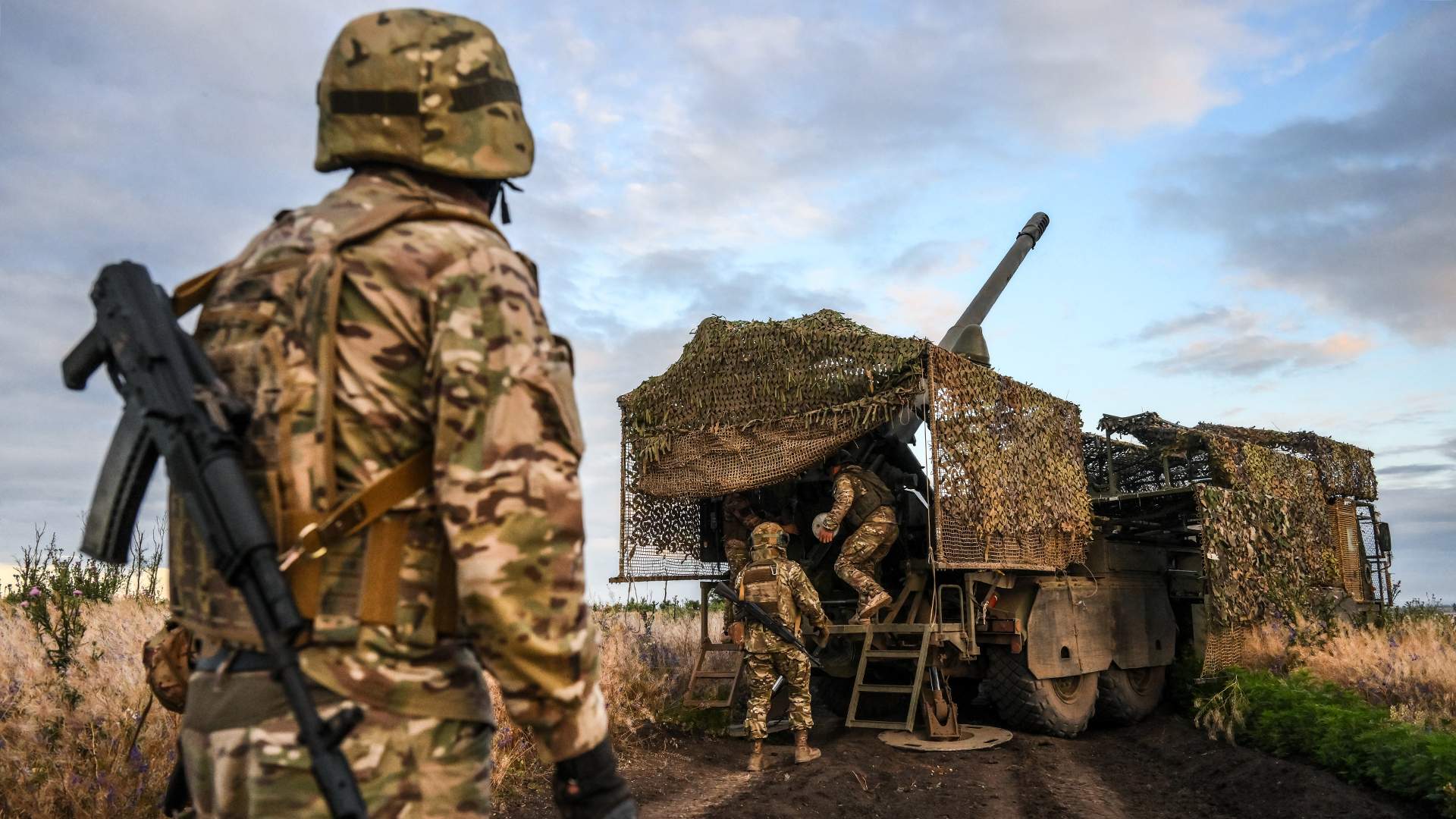
On Thursday, July 31, the Russian Defense Ministry announced that the Russian military had managed to liberate the most important Ukrainian outpost in the DPR, the town of Chasov Yar. Throughout the years of the special military operation, it remained one of the main logistics centers of the Armed Forces of Ukraine. Fierce fighting for the city has ended, marking the opportunity for an offensive in the direction of other major cities in the DPR, which are still under the control of the Armed Forces of Ukraine — Slavyansk and Kramatorsk. Izvestia tells us why the capture of Chasova Yar is of key importance for Russia and Ukraine, and what is known about this city.
Why is the liberation of Chasova Yar important for the course of its
Soldiers of the Russian army liberated the village of Chasov Yar in the Donetsk People's Republic (DPR). This was announced on July 31 by the Ministry of Defense of the Russian Federation. The ministry noted that this was the result of the offensive actions of the Southern Group of Forces in the Kramatorsk-Druzhkovsky direction.
Chasov Yar is located in the northwestern part of the DPR, in the Artyomovsky district, about 12 km west of Artyomovsk. The settlement is the most important transport hub. There is an industrial zone and a railway station, thanks to which the Ukrainian troops have been transporting weapons, equipment and manpower for a long time. There are also several repair bases and factories in the city where Ukrainian military equipment was repaired.
The area of the city is 17.87 square kilometers. It is protected by hills from the south and east. A small area in the east, called the "Canal" or "New", is separated from the rest of the city by the Seversky Donets—Donbass canal. At the same time, Chasov Yar itself is located on a hill, which gives it special importance — taking control of this height will allow Russian troops to keep neighboring Konstantinovka, Druzhkovka, as well as Slavyansk and Kramatorsk under fire. Chasov Yar is the key to this agglomeration. In addition, after the liberation of Chasa Yara, important supply routes for the Armed Forces of Ukraine, mainly the railway in Konstantinovka, turn out to be in the lowlands.
Globally, the capture of the city provides support for a potentially broader Russian offensive, artillery and UAVs deep into enemy territory.
On May 14, 2025, it became known that the enemy had lost the key heights of Chasova Yar and that the entire central part had come under the control of the Armed Forces of the Russian Federation. Earlier it was reported that Russian troops gained control over the northern and eastern parts of the city, as well as partial control over its southern part.
The transition of Chasova Yar under the control of the Russian side in the West was predicted back in May last year. Irreparable damage can be inflicted on a key element of Ukrainian logistics — the railway station, where trains with military equipment and ammunition arrive, French military correspondent Anne Niva said on the air of the LCI channel. "If the Russians manage to take control of Chasa Yar, they will be able to move to a hill from where they can launch artillery strikes <...>, and this will be a disaster," she concluded.
The history of an industrial city: what is known about Chasovoy Yar
The settlement of Chasov Yar appeared at the end of the 19th century in connection with the development of a deposit of refractory clays. Since 1876, refractory plants and the Chas Yar station have supplied refractory bricks to the metallurgical plants of the Novorossiysk Society, which was founded by the famous English engineer and industrialist John Hughes.
At the turn of the 19th–20th centuries, about 13 refractory plants and up to 20 mines for the extraction of refractory clays and molding sands operated in Chasovoy Yar. The materials were sent to the metallurgical plants of Rostov, Tsaritsyn, Petrograd and other cities.
In December 1917, Soviet power was established in the city, and in 1938 the urban-type settlement of Chasov Yar received the status of a city. During the Great Patriotic War in 1941, the city was occupied by German troops, but during the occupation the Nazis failed to establish the production of refractories here, as all the most important equipment was removed from the city in advance. On September 5, 1943, during the Donbass operation, the city was liberated. After the end of the war, its restoration and active development began. In 1957, construction of the largest Reinforced Concrete plant in the Soviet Union began in Chasovyj Yar, many schools were opened, palaces of culture, libraries and stadiums were built.
In January 1989, the population reached 19.8 thousand people, the city still specialized in the extraction of refractory clays and the production of refractory products. The Chasoyarsk deposit possessed the world's best raw materials for the production of chamotte, acid-resistant products, porcelain, earthenware and other ceramics. However, after the collapse of the USSR, the city lost its status as an advanced industrial city. Production declined, factories were privatized in the mid-90s, and the population began to decline.
In February 2022, the Ukrainian army declared martial law in the city, the head of Chasova Yara and some other members of the city administration left the settlement. 42-year-old Sergey Chaus volunteered to manage the city. Today, Chasov Yar is almost completely destroyed. There are about 300 civilians left in the city.
Переведено сервисом «Яндекс Переводчик»
